
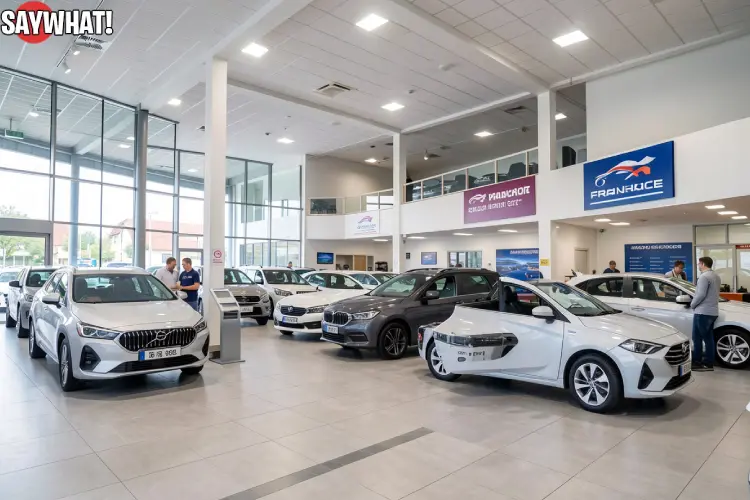
What is auto franchising and why invest in it? Auto franchising includes car dealerships, repair shops, oil change centers, and car rental services operating under established brand names. The automotive franchise sector generated approximately $188.13 billion in 2024 and is projected to reach $251.52 billion by 2029.
With 92% of U.S. households owning at least one vehicle and the average vehicle age reaching 12.6 years in 2024, auto franchises offer recession-resistant business opportunities backed by proven systems, brand recognition, and comprehensive support.
Introduction
Auto in franchising stands as one of the most stable sectors in the franchise industry. The numbers tell a compelling story. The U.S. automotive service market reached $188.13 billion in 2024. Growth projections show this figure climbing to $251.52 billion by 2029, reflecting a compound annual growth rate of 5.98%.
This growth stems from practical realities. Americans own vehicles and need services to maintain them. The average vehicle age hit 12.6 years in 2024 according to S&P Global Mobility. Older vehicles require more frequent repairs and maintenance. This creates steady demand for automotive services.
The franchise model offers distinct advantages in this sector. You get established brand recognition, operational systems tested across hundreds of locations, and comprehensive training programs. The automotive franchise sector includes approximately 18,000 franchise units with a remarkable 94% continuity rate.
This article explores how auto franchising works, what makes franchises successful, and where opportunities exist in 2025 and beyond.
Understanding Auto in Franchising
Auto franchising covers several distinct business models within the automotive sector. Each operates under a franchisor’s brand and follows established operational procedures.
Car dealerships represent the most capital-intensive category. These franchises sell new and used vehicles from specific manufacturers. In 2024, the U.S. had 18,311 new-car dealerships with 29,829 total franchises. Total franchised light-vehicle dealership sales topped $1.2 trillion. Brands like Toyota maintained the highest throughput at 1,607 vehicles per dealership in 2024.
Auto repair and service franchises dominate the automotive franchise landscape. Christian Brothers Automotive leads with average revenue of $2.8 million per location. Meineke averages $897,000 per unit across 900+ locations. These franchises provide everything from oil changes to major repairs.
Oil change and quick-lube services focus on speed and convenience. Jiffy Lube operates over 2,200 service centers across North America, serving approximately 24 million customers annually. The model emphasizes fast service with minimal customer wait time.
Auto parts stores and specialty services round out the category. These include window tinting, collision repair, tire services, and specialty vehicle customization.
Auto franchises differ from independent businesses in crucial ways. Franchisees pay initial franchise fees ($45,000-$55,000 typically) plus ongoing royalties (5-8% of gross revenue). In exchange, they receive brand recognition, operational systems, marketing support, and bulk purchasing power that independent shops cannot match.
Benefits of Auto Franchising
Brand recognition drives immediate customer trust. Consumers choose familiar names over unknown local shops. Meineke enjoys 70% brand recognition nationwide. Christian Brothers Automotive holds a 4.7 Google rating and an 83% Net Promoter Score. These metrics translate directly into customer acquisition and retention.
The business model removes guesswork. Franchisors provide detailed operational procedures, pricing strategies, and service protocols. You don’t build systems from scratch. You implement proven processes.
Training programs prepare franchisees for success. Meineke reports that 85% of their franchisees have no prior automotive experience. Comprehensive training programs cover technical skills, customer service, and business management. The franchisor invests in your success because they profit from your success.
Marketing support includes national advertising campaigns, local marketing materials, and digital marketing tools. Major franchises spend millions on brand awareness. Your local franchise benefits from this investment without bearing the full cost.
Technology and purchasing power create competitive advantages. Christian Brothers uses proprietary software that maintains 90%+ in-stock rates. Strickland Brothers provides fully integrated systems covering POS, CARFAX integration, automated marketing, and reporting. Group purchasing power reduces parts costs by 15-30% compared to independent shops.
Risk reduction matters. The franchise industry shows new franchises have a 6.3% higher success rate than independent companies after one year. The established model, support systems, and brand recognition buffer against common startup failures.
Key Strategies for Success in Auto Franchising
Choose the right franchise for your market. Research local demographics and competition. A full-service repair shop works in residential areas with older vehicles. Quick-lube services thrive near highways and commercial districts. Your market determines which franchise model fits.
Location selection impacts everything. Traffic counts, visibility, and accessibility drive customer volume. Successful franchisees conduct thorough site assessments before signing leases. Quick-lube franchises need 2,000-3,000 vehicle passes daily. Full-service repair shops prioritize neighborhood presence over highway visibility.
Inventory management and service quality separate good franchises from great ones. Modern systems track parts usage, predict demand, and automate reordering. Quality control systems ensure consistent service across all locations. Christian Brothers Automotive franchisees maintain high standards through regular quality audits and customer feedback systems.
Marketing strategies must combine national brand leverage with local engagement. Successful franchisees use:
- Digital marketing through Google Ads and social media
- Local partnerships with car dealers, insurance agencies, and fleet managers
- Customer loyalty programs with email marketing
- Community involvement through sponsorships and events
Technology adoption drives efficiency and customer satisfaction. Online booking systems let customers schedule appointments 24/7. Mobile apps provide service reminders and maintenance tracking. CRM systems personalize customer interactions and increase retention rates.
Indiana Jiffy Lube demonstrates effective technology use. Their 17 locations increased Google reviews from 6,000 to 10,000 in just five months using automated review collection. This 65% increase drives new customer acquisition through improved online visibility.
Challenges in Auto Franchising
High initial investment creates barriers to entry. Quick-lube concepts like Strickland Brothers start around $218,000. Full-service automotive repair franchises require $500,000-$1,000,000+. Christian Brothers Automotive ranges from $520,250 to $645,400. These figures include franchise fees, equipment, real estate, working capital, and initial marketing.
Ongoing fees reduce profitability. Royalty fees typically run 5-8% of gross revenue. Marketing fees add another 2-4%. A franchise generating $800,000 annually pays $40,000-$64,000 in royalties plus $16,000-$32,000 for marketing. These costs persist regardless of profitability.
Competition comes from all directions. Other franchises operate in the same market. Independent shops undercut pricing. Quick-lube chains compete for the same customers. National chains like Walmart and Costco offer automotive services as loss leaders.
Dependence on franchisor policies limits flexibility. Franchisees must follow approved suppliers, service protocols, and pricing structures. Innovation requires franchisor approval. This structure provides consistency but restricts entrepreneurial freedom.
Staff recruitment and retention challenge every franchise owner. The automotive industry faces a skilled labor shortage. Technicians require specialized training on modern vehicle systems. Competitive wages, benefits, and positive work environments are essential. Turnover costs money and disrupts service quality.
86% of franchises report that rising costs have impacted their business. Labor costs remain a top challenge for 34% of franchise businesses. These pressures require careful financial management and operational efficiency.
Legal and Regulatory Considerations
The Federal Trade Commission regulates franchise sales through the Franchise Rule. This rule requires franchisors to provide a Franchise Disclosure Document (FDD) to prospective franchisees at least 14 days before signing any agreement or making payments.
The FDD contains 23 specific items including:
- Franchisor business experience and litigation history
- Initial investment requirements (Item 7)
- Ongoing fees and royalties
- Territory rights and restrictions
- Financial performance representations (Item 19)
- Franchisee turnover rates
- Audited financial statements for the last three fiscal years
Review the FDD carefully. Item 19 reveals actual financial performance data from existing franchisees. This section is optional, but most reputable franchisors provide it. Item 7 breaks down every startup cost. Compare these figures against your available capital and financing options.
State regulations vary significantly. Registration states like California, New York, Illinois, and Maryland require franchisors to register their FDD with state agencies before selling franchises. Other states have filing requirements or relationship laws governing franchisor-franchisee interactions.
Licensing and permits for automotive businesses include:
- Business licenses from local municipalities
- Environmental permits for handling hazardous materials
- Automotive repair dealer licenses
- Emissions testing certification (where applicable)
- Professional certifications for technicians
Automotive-specific regulations cover:
- Environmental Protection Agency rules for waste oil, refrigerants, and solvents
- Occupational Safety and Health Administration workplace safety standards
- State consumer protection laws for auto repairs
- Warranty and service contract regulations
Consult with a franchise attorney before signing. They review the FDD, explain legal obligations, and negotiate terms where possible. This investment prevents costly mistakes and protects your interests.
Case Studies of Successful Auto Franchises
Christian Brothers Automotive exemplifies excellence in the full-service repair segment. Founded in 1982 and franchising since 1996, they operate 280+ locations. Average revenue hits $2.8 million per location with strong profitability metrics.
The secret to their success lies in culture and systems. They’ve earned the #1 automotive franchise ranking for franchisee satisfaction for ten consecutive years from Franchise Business Review. Their 4.7 Google rating and 83% Net Promoter Score demonstrate exceptional customer satisfaction.
Christian Brothers provides:
- Comprehensive technical training on modern vehicle systems
- Business management coaching and financial guidance
- Proprietary inventory management software
- Strong brand identity built on honesty and integrity
- 24/7 virtual coaching for franchisees
Their initial investment ranges from $520,250 to $645,400 with a $50,000 franchise fee. The higher investment delivers higher returns through premium positioning and strong customer loyalty.
Meineke Car Care Centers demonstrates scalability in the mid-market segment. Operating over 966 locations worldwide, Meineke maintains 70% brand recognition. Average revenue per unit reaches $897,000.
PARC Auto, backed by Kian Capital, became Meineke’s largest franchisee in just 13 months. They grew from 15 to 37 locations through strategic acquisitions and new store openings. CEO Don Hill previously led Premium Velocity Auto with 375 Jiffy Lube locations.
Meineke’s advantages include:
- Part of Driven Brands, the largest automotive aftermarket franchisor
- Cutting-edge KPI dashboards and management portals
- Six consecutive years of same-store sales growth
- Comprehensive training programs for non-automotive professionals
- Piloting electric vehicle service concepts in high-EV markets
The company recognizes market shifts and adapts. They’re testing EV service centers in Portland and potentially Austin, positioning for future growth as vehicle technology evolves.
Jiffy Lube leads the quick-lube category with over 2,200 locations serving 24 million customers annually. Founded in 1971 and now owned by Shell plc, Jiffy Lube built its empire on speed, convenience, and consistency.
Successful multi-unit operators demonstrate the model’s scalability. Premium Velocity Auto operated 375 Jiffy Lube franchises with 3,400 employees across 20 states before leadership moved to PARC Auto’s Meineke expansion.
Jiffy Lube provides:
- Instant brand recognition in the quick-lube market
- Proprietary training programs and operational systems
- Jiffy Lube Connect platform for franchise operations
- National marketing campaigns worth millions
- Efficient service model with minimal customer wait times
The franchise implements payment innovations to drive sales. Partnerships with FlexShopper expanded from 8 to over 100 locations, offering customers flexible payment options that increase average ticket size and customer satisfaction.
Future Opportunities in Auto Franchising
Electric vehicles are reshaping the automotive landscape. Over 3.5 million EVs are registered in the U.S. as of 2024. The EV market is projected to grow at 29% CAGR through 2030.
EV charging station franchises represent the fastest-growing opportunity. The U.S. needs over 3 million charging stations by 2031 – a 15x expansion from the current 200,000 stations. This creates a massive infrastructure buildout comparable to the early days of gas stations.
Investment ranges from moderate to significant depending on the model:
- Level 2 chargers generate $6,000-$18,000 annually per unit
- DC fast chargers produce $36,000-$144,000 annually per unit
- Federal NEVI program provides up to 75% funding
- 30C federal tax credit covers 30% of installation costs up to $100,000 per charger
EV service and repair franchises address the growing need for specialized electric vehicle maintenance. Traditional mechanics lack EV-specific training. Franchises offering EV diagnostic services, battery refurbishment, and specialized repairs will capture this emerging market.
Meineke is piloting EV service concepts in Oregon and potentially Texas. Markets with high EV adoption like Portland, Austin, and California cities offer first-mover advantages.
Online sales and digital platforms transform how customers interact with automotive services. Mobile apps, online scheduling, and digital payment systems become standard expectations. Franchises that integrate these technologies capture younger demographics and improve operational efficiency.
Digital engagement increases service utilization and provides measurable marketing ROI. Automated customer feedback systems, loyalty program integration, and targeted social media advertising drive customer acquisition and retention.
Emerging markets create expansion opportunities. Southeast and Southwest states show the fastest franchise growth due to business-friendly policies and lower costs of living. Florida and Texas rank among the top four automotive markets in the U.S.
International expansion accelerates. U.S. franchise brands operating internationally are projected to surpass 50,000 units in 2025, with notable growth in Asia and Latin America.
Technology integration continues reshaping auto services:
- Artificial intelligence for predictive maintenance and diagnostics
- Automated inventory management and parts ordering
- Customer relationship management systems
- Advanced vehicle diagnostic equipment for modern vehicles
- Mobile service units bringing repairs to customer locations
Franchises that adopt these technologies early gain competitive advantages and improve profitability margins.
Conclusion
Auto franchising offers proven pathways to business ownership in a recession-resistant industry. The sector demonstrates consistent growth with the U.S. automotive service market projected to reach $251.52 billion by 2029.
Success requires careful research and planning. Review Franchise Disclosure Documents thoroughly. Analyze local market conditions and competition. Choose franchises that align with your capital, skills, and market needs. Consult legal and financial advisors before committing.
The advantages are clear: established brand recognition, comprehensive training, operational support, marketing resources, and purchasing power. These benefits reduce risk and accelerate profitability compared to independent startups.
Challenges exist but can be managed. High initial investments require solid financing. Ongoing fees reduce margins but fund valuable support systems. Labor shortages demand competitive compensation and positive work cultures.
The future looks bright for well-positioned franchisees. Electric vehicle services create new opportunities. Digital transformation improves customer experience and operational efficiency. Market expansion into growing regions offers room for multi-unit operators.
With 92% of U.S. households owning vehicles and the average age of those vehicles increasing, demand for automotive services remains strong and growing. Auto franchising provides the structure, support, and brand power to capitalize on this sustained demand.
Research thoroughly. Plan carefully. Choose wisely. The road ahead offers substantial opportunities for franchisees ready to commit to excellence in the automotive franchise sector.
