Mike Tyson Net Worth 2026: $30 Million, Boxing Career and Wealth

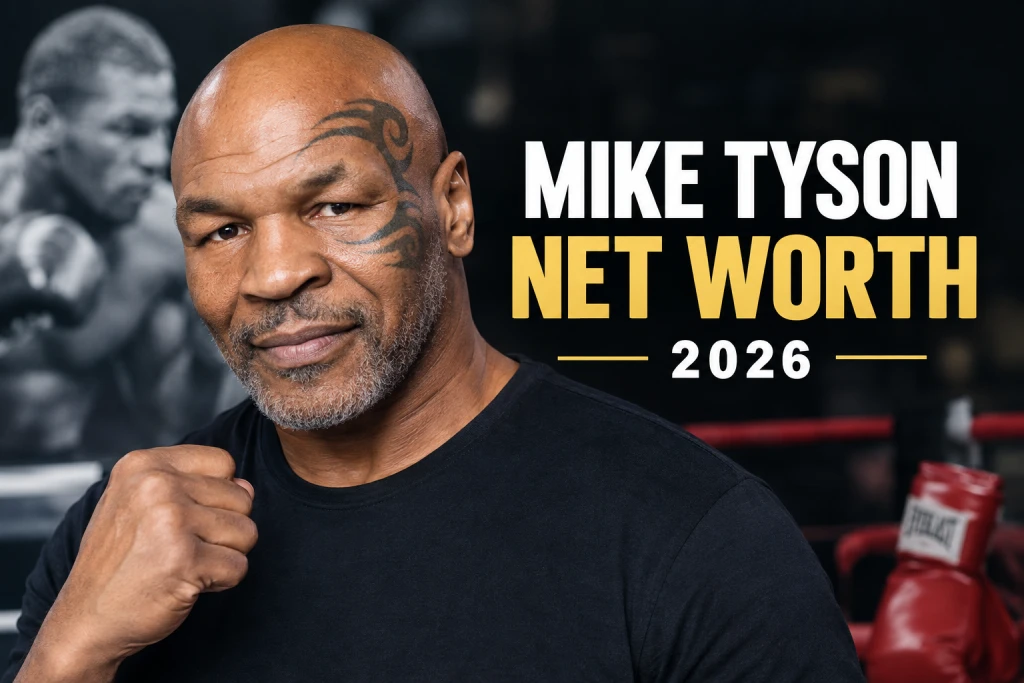
Few names in sports carry as much weight as Mike Tyson. As of 2026, Mike Tyson net worth is estimated at $30 million, according to Celebrity Net Worth. His fortune reflects massive boxing paydays, financial setbacks, bankruptcy, and a comeback through business and entertainment.
In this article, we’ll explore how Tyson made, lost, and rebuilt his wealth. Read more about Jake Paul Net Worth
Mike Tyson Net Worth: Quick Facts
| Detail | Information |
|---|---|
| Estimated Net Worth (2026) | $30 million |
| Full Name | Michael Gerard Tyson |
| Born | June 30, 1966, Brooklyn, New York |
| Profession | Former professional boxer, entrepreneur, podcaster, entertainer |
| Nickname | Iron Mike |
| Known For | Youngest heavyweight boxing champion in history |
| Career Span | 1985 to 2005 (professional), later exhibition bouts |
| Peak Net Worth | Estimated $300 to $400 million |
| Main Income Sources | Boxing purses, cannabis business, podcasting, endorsements, appearances |
Mike Tyson’s Early Life and Boxing Beginnings
Tyson’s story starts in a rough part of Brooklyn, New York, where he was born in 1966. Life wasn’t easy for him growing up, and boxing became his way out.
That changed when he crossed paths with legendary trainer Cus D’Amato, who saw something special in the young fighter. D’Amato didn’t just teach him technique, he shaped his entire mindset for the ring.
| Stage | What Happened | Why It Mattered |
|---|---|---|
| Childhood in Brooklyn | Grew up in a difficult neighborhood with few options | Gave him the hunger that defined his fighting style |
| Meeting Cus D’Amato | Started training as a young teenager under D’Amato | Turned raw aggression into disciplined technique |
| Amateur career | Built a reputation fast through knockout wins | Created buzz before he ever turned professional |
| Turning pro in 1985 | Debuted at 18 years old | Opened the door to his first real paydays |
This early groundwork became the base of everything Tyson would later earn.
Mike Tyson’s Rise to Boxing Stardom
Tyson’s professional debut in 1985 kicked off one of the most electrifying runs in boxing history. He didn’t just win fights, he ended them fast.
At just 20 years old, he knocked out Trevor Berbick to become the youngest heavyweight champion in boxing history. From there, he went on to unify the WBC, WBA, and IBF titles, something no heavyweight had done before him.
| Milestone | Year | Significance |
|---|---|---|
| Professional debut | 1985 | Started his run with a string of quick knockouts |
| WBC heavyweight title | 1986 | Became the youngest heavyweight champion ever at age 20 |
| WBA heavyweight title | 1987 | Moved closer to unifying the division |
| IBF heavyweight title | 1987 | Became undisputed heavyweight champion of the world |
| Undisputed reign | 1987 to 1990 | Peak earning power and global fame |
Here’s why that mattered financially:
- Championship status meant bigger fight purses
- Networks and promoters wanted him on pay-per-view
- His intimidating persona sold tickets on its own
- Every win increased his value for the next fight
This combination of fame and fear turned Tyson into one of the highest earning athletes of his era.
How Much Did Mike Tyson Earn From Boxing?
Boxing purses made up the bulk of Tyson’s fortune, and his biggest fights generated jaw-dropping numbers.
| Opponent | Year | Reported Purse (Estimated) |
|---|---|---|
| Larry Holmes | 1988 | Around $2 million |
| Michael Spinks | 1988 | Around $20 million |
| Evander Holyfield (rematch) | 1997 | Around $30 million |
| Lennox Lewis | 2002 | Around $17 to $20 million |
| Jake Paul (exhibition) | 2024 | Around $20 million |
Keep in mind these are reported estimates, not confirmed contracts. Figures vary between sources depending on whether they include base pay, bonuses, promoter splits, and pay-per-view revenue shares. Regardless of the exact number, Tyson earned more per fight than most athletes make in a lifetime.
Mike Tyson’s Biggest Career Earnings
During his peak years, Tyson wasn’t just winning titles, he was cashing checks that redefined what a boxer could earn. Estimates suggest he made over $400 million across his career from fights and endorsements combined.
It’s important to separate two different things here:
| Term | What It Means | Tyson’s Figure |
|---|---|---|
| Career earnings | Total money made across an entire career, before taxes and expenses | Estimated $400 million or more |
| Current net worth | Assets minus liabilities right now | Estimated $30 million in 2026 |
Earning a fortune and keeping one are two very different challenges, and Tyson’s story is a clear example of that gap.
How Mike Tyson Lost Much of His Fortune
This is one of the most talked about parts of Tyson’s financial history. Despite earning hundreds of millions, he filed for bankruptcy in 2003, citing debts of more than $23 million.
| Factor | Impact on His Wealth |
|---|---|
| Lavish lifestyle | Mansions, exotic cars, jewelry, and parties drained cash quickly |
| Exotic pets | Reportedly paid around $50,000 each for Bengal tigers, plus upkeep |
| Legal costs | Lawsuits and settlements consumed a large share of his earnings |
| Divorce and support | Settlements and ongoing payments reduced his remaining assets |
| Financial management | Poor advice and limited oversight during his highest earning years |
It’s a sobering reminder that career earnings don’t automatically translate into long term wealth. Tyson has spoken openly about these struggles over the years rather than hiding from them, which is part of why his comeback story resonates with so many fans.
Mike Tyson’s Businesses and Other Income Sources
Retirement from boxing didn’t mean retirement from earning. Tyson has built a second act around several ventures.
| Venture | Type | Role in His Income |
|---|---|---|
| Tyson Ranch and Tyson 2.0 | Cannabis brand | One of his most significant post-boxing businesses |
| Hotboxin’ with Mike Tyson | Podcast | Steady media revenue and sponsorship exposure |
| Acting and film | Entertainment | Roles including The Hangover series |
| Public appearances | Events | Paid appearances, conventions, and speaking slots |
| Brand partnerships | Endorsements | Deals tied to his name and image |
| Merchandise and licensing | Consumer products | Ongoing royalties from his legacy brand |
These ventures have become a meaningful part of how Tyson generates income today.
Mike Tyson’s Cannabis Business and Entrepreneurial Career
One of Tyson’s most notable post-boxing moves has been his entry into the cannabis industry. His Tyson Ranch project and Tyson 2.0 brand have turned into a real business, not just a celebrity endorsement.
A few points worth noting:
- The venture reflects a broader trend of athletes building brands after retirement
- Business revenue is separate from personal net worth, since it depends on his ownership stake and profit share
- This entrepreneurial chapter shows a more strategic, business-minded side of Tyson compared to his boxing years
It’s a good example of how former athletes can create new income streams long after their playing days end.
Mike Tyson’s Luxury Lifestyle and Assets
During his prime, Tyson was known for spending as fast as he earned. His lifestyle became almost as famous as his boxing record.
| Asset Type | Examples |
|---|---|
| Real estate | Multiple mansions across the United States |
| Exotic animals | Bengal tigers and other rare pets |
| Cars | Lamborghinis, Ferraris, and Rolls-Royces |
| Jewelry and watches | High end pieces bought at peak earning years |
| Entertainment | Lavish parties, travel, and large personal entourage |
This lifestyle played a direct role in his later financial troubles, and it’s often cited as a cautionary tale in discussions about athlete finances.
Mike Tyson’s Personal Life and Family
Tyson has been married three times and has several children. His family life has often intersected with his public image, and he has spoken about fatherhood as a grounding influence later in life. While personal details are widely reported, the focus here stays on how his life story connects to his overall financial journey.
Mike Tyson’s Comeback and Continued Popularity
Tyson never really left the spotlight. His return to exhibition boxing, including his highly publicized 2024 bout, reignited public interest and reminded everyone why he remains one of the most recognizable figures in sports.
This continued popularity has opened doors in:
- Media appearances and interviews
- Business partnerships and investment opportunities
- Entertainment projects and streaming events
- Sponsorship and endorsement deals
His name still carries commercial weight, which is a big reason his net worth has stabilized rather than continuing to decline.
Mike Tyson’s Net Worth 2026: How His Wealth Is Built Today
Tyson’s current fortune comes from a mix of sources rather than one single paycheck.
| Income Category | Description |
|---|---|
| Boxing legacy earnings | Remaining income tied to his boxing career and exhibition bouts |
| Business ventures | Cannabis brand and related product lines |
| Entertainment | Acting roles, TV appearances, and live shows |
| Endorsements | Brand deals tied to his name and image |
| Media and podcasting | Revenue from his podcast, interviews, and digital content |
| Other commercial opportunities | Merchandise, licensing, and paid public appearances |
It’s worth repeating that $30 million is an estimated figure, not an exact bank balance. Different outlets calculate net worth differently, so estimates can vary from source to source.
Mike Tyson Net Worth Compared With His Career Earnings
This is often the most confusing part for fans. How can someone earn hundreds of millions and end up with a fraction of that later on?
| Stage | Approximate Estimate | What Was Happening |
|---|---|---|
| Peak career (late 1980s to 1990s) | $300 to $400 million | Record breaking purses and global fame |
| Bankruptcy filing (2003) | Debts of over $23 million | Spending, legal costs, and poor management caught up |
| Post-retirement rebuild | Gradual recovery | Acting, podcasting, and business ventures |
| After the 2024 exhibition | Around $30 million | A reported $20 million payday boosted his position |
| 2026 | $30 million (estimated) | Stable income from diversified ventures |
The gap between what someone earns and what they keep is common among athletes, and Tyson’s case is one of the most well documented examples in sports history.
FAQs
1. What is Mike Tyson’s net worth in 2026?
Mike Tyson’s estimated net worth in 2026 is $30 million, according to Celebrity Net Worth.
2. How did Mike Tyson make his money?
He earned his fortune primarily through boxing purses, later adding income from endorsements, acting, podcasting, and his cannabis business.
3. Did Mike Tyson lose all of his money?
Not all of it, but he came close. He filed for bankruptcy in 2003 after lavish spending and legal issues wiped out much of his boxing fortune. He has since rebuilt a portion of his wealth through business ventures.
4. How much money did Mike Tyson make from boxing?
Across his career, Tyson is estimated to have earned over $400 million from fight purses and endorsements, though exact figures vary depending on the source and what’s included.
5. Is Mike Tyson still making money?
Yes. Between his cannabis brand, podcast, acting roles, and public appearances, Tyson continues to generate income well after retiring from professional boxing.
Final Thoughts
Mike Tyson’s financial journey is as dramatic as his boxing career. From earning hundreds of millions in the ring to filing for bankruptcy, and now rebuilding wealth through smart business moves, his story offers a real look at how fortunes rise, fall, and sometimes rise again.
With an estimated Mike Tyson net worth of $30 million in 2026, he remains a name that carries weight far beyond the boxing ring, in business, entertainment, and pop culture alike. Given his ongoing ventures and enduring popularity, it wouldn’t be surprising to see that number keep climbing in the years ahead.
Want to discover more celebrity net worth stories? Visit SayWhatMagazine for detailed breakdowns of celebrity fortunes, careers, income sources, and lifestyles.

Michael Caine
Michael helps readers understand money without the confusing jargon — saving, smart shopping, business and planning for the future. Before joining SayWhatMagazine he worked at a bank, helping ordinary people with their finances, and his articles often include real examples from his own life, which makes his advice feel practical and real.
More from Michael Caine