
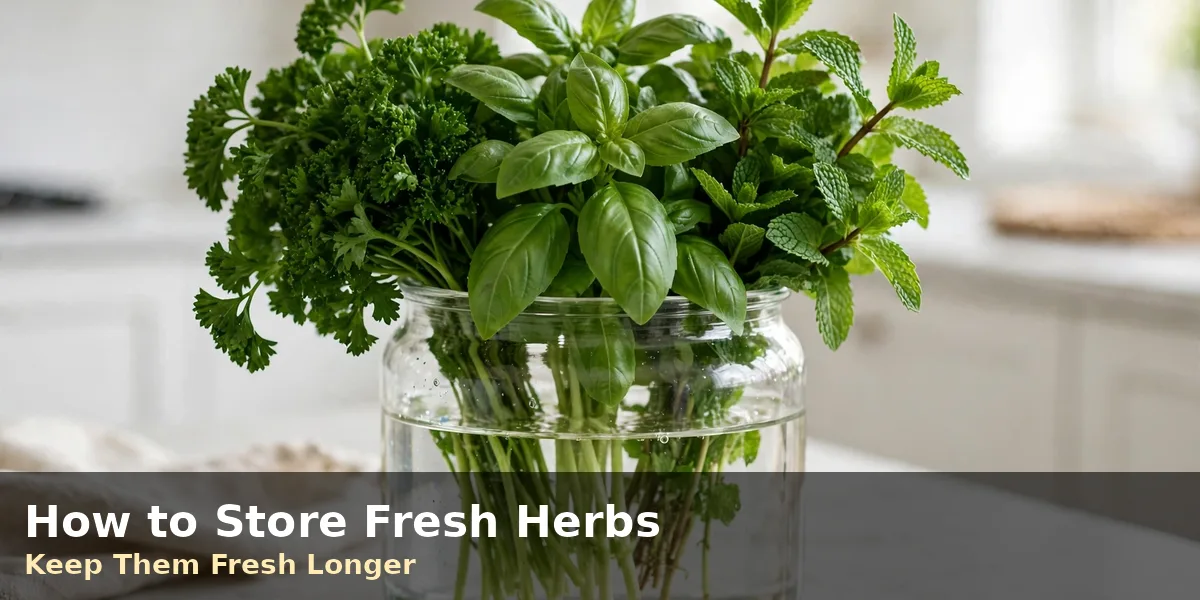
Learning how to store fresh herbs saves money and flavour in everyday cooking. A bunch of parsley can fade in two days in a loose bag. The same bunch can stay bright for a week or more with one small change.
You need no special kit for most of this guide. A jar, a little water, kitchen paper and a container cover most cases. An ice cube tray helps when you have more herbs than you can use. Start with the sort below, then pick the method that fits your bunch.
Key Takeaways
- How to store fresh herbs well starts with one sort: tender or woody.
- Tender herbs stand in water, covered loosely, in the fridge.
- Basil stays on the counter, since cold turns its leaves black.
- Woody herbs last longer wrapped in damp kitchen paper.
- Freeze or dry any surplus before it fades, and use it in cooked dishes.
How to Store Fresh Herbs, in Plain Terms
Stand tender herbs in a jar of water in the fridge. Cover the leaves loosely, and change the water every two or three days. Wrap woody herbs in damp kitchen paper, then place them in a container in the fridge. Keep basil on the counter in water, and freeze or dry any surplus fast.
Herbs fade for three plain reasons: lost water, too much damp, and warm air. Loose bags in a fridge drawer give them all three at once. Leaves wilt when stems dry out, and rot sets in when leaves stay wet. Good storage controls water and air, and keeps each herb at its best temperature.
Use this guide as a weekly routine, not a one off chore. Sort herbs on shopping day, store them the same day, and check jars twice a week. Our guide to how to start cooking at home for beginners pairs well with this routine.
Sort Your Herbs First: Tender or Woody?
Tender herbs have soft stems and leaves that wilt fast. Parsley, coriander, dill, mint and chives all sit in this group. Woody herbs have firm stems and tougher leaves that hold up longer. Rosemary, thyme, sage and oregano sit in that second group.
The EUFIC guide to keeping herbs fresh draws the same split. Use the table below to place each bunch before you store it. The wrong method shortens the life of a fresh bunch a lot.
| Herb | Type | Best method | Rough keep time |
|---|---|---|---|
| Parsley | Tender | Jar of water in the fridge | About 1 to 2 weeks |
| Coriander | Tender | Jar of water in the fridge | About 1 to 2 weeks |
| Dill | Tender | Jar of water in the fridge | About 1 to 2 weeks |
| Mint | Tender | Jar of water in the fridge | About 1 to 2 weeks |
| Chives | Tender | Jar of water in the fridge | About 1 week |
| Basil | Tender | Jar of water on the counter | About 1 week |
| Rosemary | Woody | Damp wrap in the fridge | About 2 weeks or more |
| Thyme | Woody | Damp wrap in the fridge | About 2 weeks or more |
| Sage | Woody | Damp wrap in the fridge | About 2 weeks or more |
| Oregano | Woody | Damp wrap in the fridge | About 2 weeks or more |
Store Tender Herbs in Water Like Cut Flowers
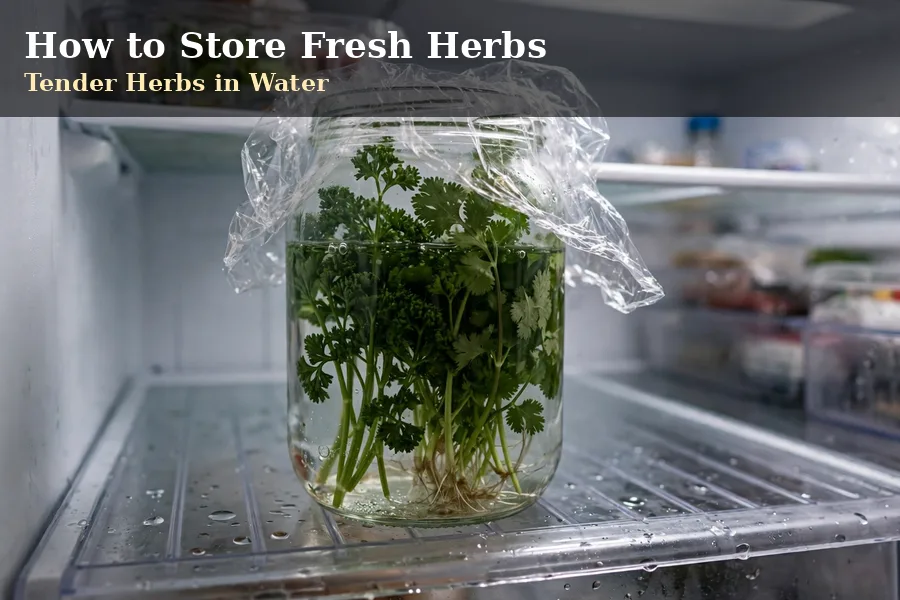
The jar method is the core of how to store fresh herbs with soft stems. Trim a little from the stem ends, then stand the bunch in a jar. Add cool water to cover the stem ends, but keep leaves above the water. A loose cover over the top slows water loss from the leaves.
- Trim the stem ends by a small amount with clean scissors.
- Stand the bunch upright in a jar with cool water.
- Slip a loose bag or cover over the leaves.
- Place the jar in the fridge, away from strong smells.
- Change the water every two or three days, and trim dark ends.
Change the water on time, since stale water speeds up rot. Remove any leaf that falls below the water line at once. Check the bunch each time you open the fridge door. Use the oldest jar first, so no bunch sits past its best.
Why Basil Stays Out of the Fridge
Basil breaks the jar rule in one way: it hates the cold. Fridge cold can turn basil leaves black and soft in a day or two. Keep basil in a jar of water on the counter instead. Choose a bright spot out of direct sun, and change the water often.
Use basil first when a recipe calls for fresh leaves. Its flavour fades fast once leaves darken, even in water. A small pot on a windowsill can give fresh leaves for weeks. Pick leaves from the top, and let side shoots grow on.
Wrap Woody Herbs for a Longer Fridge Life
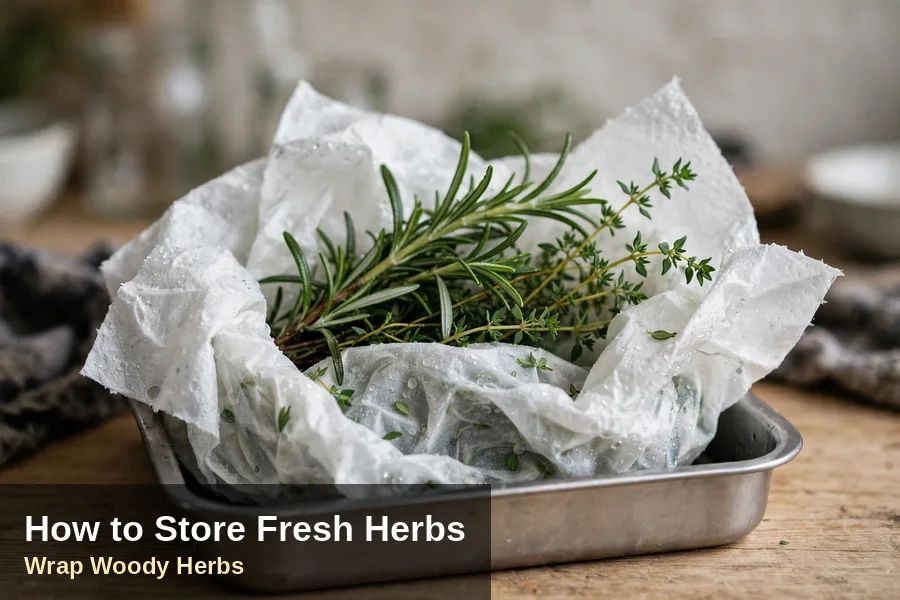
Woody herbs need less water than tender herbs, and more protection from dry air. A damp wrap gives that balance without soaking the leaves. Lay the sprigs in a single layer on damp kitchen paper. Roll the paper loosely, then place the roll in a container or bag.
- Dampen the paper, then wring it so it feels moist, not wet.
- Re-damp the paper if it dries out before the herbs fade.
- Keep the container in the main fridge body, not the door.
This method also works for sage and oregano from the shop. Check the wrap once a week, and remove any dark sprig. Dry sprigs can still flavour cooked dishes, so do not bin them at once. Many cooks learn how to store fresh herbs this way first.
Freeze Herbs You Cannot Use in Time
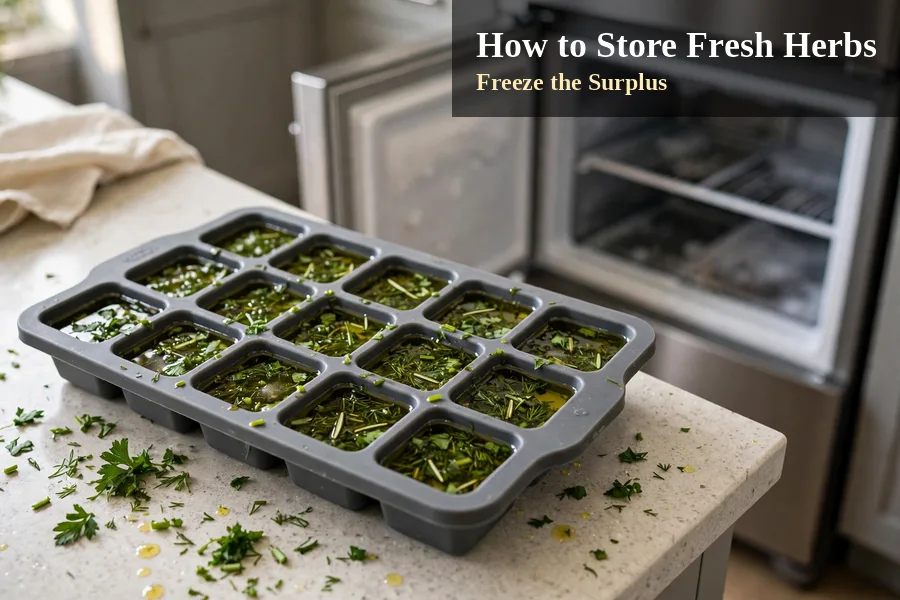
Freezing saves a glut of herbs for soups, sauces and stews. Chop the leaves and pack them into an ice cube tray. Cover each cube with a little oil or water, then freeze the tray. Move the frozen cubes to a labelled bag for easy use.
- Use frozen herbs in cooked dishes, since thawed leaves turn soft.
- Drop one cube straight into a pan, with no need to thaw first.
- Label the bag with the herb name and the date you froze it.
Oil cubes suit savoury cooking, and water cubes suit soups and sauces. See our guide to how to build a healthier daily routine for simple meal ideas. Frozen herbs keep their flavour for many months in a cold freezer. They lose their fresh crunch, so skip them for salads and garnish.
Dry Woody Herbs for the Cupboard
Drying is the last step in how to store fresh herbs for the cupboard. It suits woody herbs best, since their leaves hold flavour when dry. Tie small bundles with string, and hang them in a dry, airy spot. Keep bundles out of direct sun, so colour and flavour hold longer.
- Wait until leaves crumble between your fingers before you strip them.
- Store dried leaves in a small airtight jar in a dark cupboard.
- Use a smaller amount of dried herb than you would fresh.
Tender herbs dry less well, since their leaves hold more water. Freeze tender herbs instead, and dry only woody types at home. Label each jar, and use dried herbs within a year for best flavour.
Revive Limp Herbs and Spot the Ones to Throw Away
Limp herbs can often bounce back with a short soak in cold water. Trim the stem ends, then stand the bunch in cold water for ten to twenty minutes. Pat the leaves dry before you store or use them. This trick works best for parsley, coriander and mint.
- Slimy leaves, black patches or a sour smell mean the bunch is done.
- Bin any bunch that stays limp after a cold water soak.
- Wash hands and boards after you handle spoiled herbs.
Use fading herbs fast in pesto, soup, sauce or herb butter. A quick meal plan stops the same waste next week. Our plan your meals for the week guide gives simple planning ideas for busy homes. Small habits like these cut waste without extra shopping trips.
Frequently Asked Questions
How long do fresh herbs last in the fridge?
Tender herbs in water often last about one to two weeks in the fridge. Woody herbs in a damp wrap often last about two weeks or more. Basil on the counter lasts about a week if you change its water.
Should I wash herbs before I store them?
Store most herbs unwashed, and wash them just before you use them. Extra water on leaves speeds up rot in the fridge. If a bunch arrives damp, pat it dry before you store it.
Can I freeze all fresh herbs?
Most herbs freeze well for cooked dishes, soups and sauces. Chives and basil freeze best as oil cubes for cooking. Frozen leaves turn soft, so they suit cooking, not fresh salads.
Why did my basil turn black in the fridge?
Cold air harms basil leaves, and black patches show cold damage. Basil needs room temperature, so keep it on the counter in water. Pick dark leaves off at once, and use the rest fast.
Can I store potted herbs the same way?
Potted herbs need a different routine from cut bunches. Give them a bright spot, water when the soil feels dry, and room to grow. Move a crowded shop pot to a larger pot with fresh soil.
What can I do with herbs that are fading fast?
Blend fading herbs into a sauce, or stir them into soup. Freeze the rest in oil cubes for later cooked dishes. Use soft leaves the same day, and bin any slimy bunch.
Try the Jar Method Tonight and Waste Less This Week
Now you know how to store fresh herbs by type, not by guesswork. Pick one jar for tender herbs and one wrap for woody herbs. Freeze any surplus in a tray before the week ends.
Check jars when you cook, change water on time, and use the oldest bunch first. Small steps like these keep flavour high and waste low all week. Start tonight with the bunch already in your fridge.
