
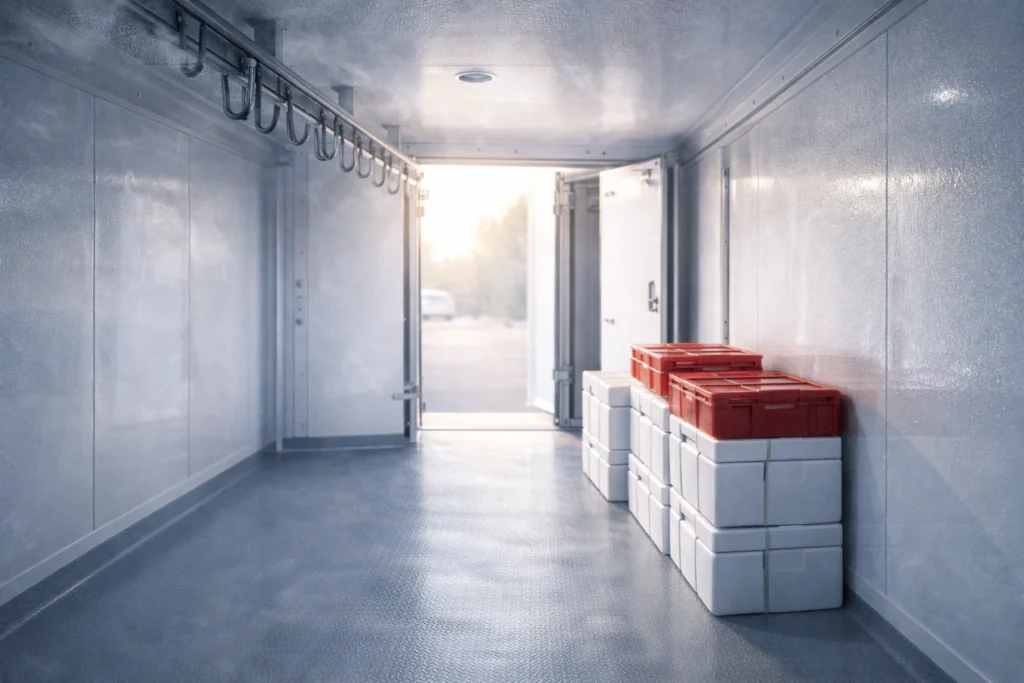
Running a meat route is not the same as running dry goods. There are two invisible enemies you are waging war on every day: odor and moisture. If one of those gets ahead of you, it does not just smell bad. It can also cause bacteria to form, reduce shelf life, present slip hazards, and add stress to your inspections. From what I have seen working with cold-chain operations, the worst mistakes usually occur in two areas: the build of the truck body and the daily routine that follows.
This guide takes a closer look at how the proper composite body panels and a well-designed refrigerated truck body can work together to minimize condensation, prevent seepage, and ensure that odors are not a permanent passenger of your goods.
Why Meat Routes Become Odor and Moisture Problems
Every time you open a door, humid air tumbles inside the cold box. When relatively warm air meets colder walls, ceilings, or metal edges, water droplets form. Eventually, that moisture finds its way through seams and pools in corners, under floor mats, or beneath pallets. When a body has thermal bridges or metal framing directly exposed, condensation happens almost continuously instead of only occasionally.
Organic residue creates “odor memory”
Biofilm can form on meat juices, packaging drips, and residues that collect in hidden spots. After odor molecules penetrate grainy textures, fill porous structures, or embed in hairline cracks along sealer lines, the box stops being truly clean even after a wash. Fleets often spend more on stronger chemicals when the real problem is a worn floor joint or a damaged wall liner retaining residue.
Why Truck Body Materials Matter Most
Composite body panels vs conventional materials
A contemporary meat-hauling box is often built with composite sandwich panels designed for temperature stability and reduced thermal bridging. Moisture resistant and able to withstand repeated washdowns, composite body panels are typically constructed with an insulated core between corrosion resistant skins. Compared with bodies built around exposed metal frames, composites can significantly reduce cold spots where condensation loves to form.
For meat routes, prioritize panel systems that offer low moisture absorbability, strong vapor barrier performance, and washable surfaces that do not allow residue to accumulate. Even a slight improvement in insulation continuity can lower interior moisture build-up and delay odor formation.
The real battle is in seams, corners, and door frames
Smell and dampness usually do not originate in the middle of a wall panel. They start where surfaces meet. Loose joints, poor sealant work, and sharp inner corners become collection zones. A refrigerated truck body for meat routes needs tight joints, sealed penetrations, and interior geometry that makes it easy for washdown water to move out, not settle in.
Design Features That Help Prevent Odor and Moisture
Insulation continuity and vapor control
Moisture management is not only about dehumidifying. It is also about reducing the conditions that cause humidity spikes. Look for a build that keeps insulation tight with no gaps around posts, roof bows, and door openings. A strong vapor barrier approach helps block hidden moisture movement that can lead to rot, delamination, and air quality issues.
Smooth liners and coved corners
Square corners trap residue. Coved corners and smooth liners make deep cleaning faster because water and foam can flow down instead of puddling. In practice, the crews that clean best are often not rushing. They simply have a box that cleans well. That usually means fewer seams, less exposed fasteners, and no “dirt shelves” where grime collects.
Flooring and drainage that actually drains
A meat route floor should handle chemicals, wear and tear, and repeated wet-dry cycles. Just as important, it must guide water to the exit. A poorly sloped floor or blocked drain path creates standing water, and standing water quickly becomes odor and contamination. If your operation does regular washdowns, give drainage and floor edges as much attention as insulation.
Day-to-Day Habits That Keep the Box Fresh
Pre-cool discipline reduces sweating
Consistent pre-cooling is one of the simplest moisture-control wins. If the box is warm and you load cold product, you trigger immediate condensation. When you use the box at the target temperature, you reduce moisture swings and help maintain more stable humidity.
Loading practices that support airflow
Overcrowding walls and blocking air channels create warm pockets and uneven cooling. That leads to localized condensation and faster odor formation. Leave proper airflow channels and avoid forcing pallets tightly into corners where water tends to hang around.
Cleaning for the parts you cannot see
Odor control is rarely solved by using more chemicals. It is solved by cleaning smarter. Focus on door gaskets, thresholds, lower wall edges, and floor seams. Use cleaning protocols that include a rinse, adequate detergent dwell time, and a clean final rinse. Chemicals should not be left behind because residue can attract dirt.
Drying matters as much as washing
If you close the doors on a damp box, you are essentially growing smells. A short drying window, fans, or safely leaving doors open between runs can noticeably reduce long-term odor issues.
Picking the Right Composite for Your Meat Run
Not all routes need the same body type. Short in-town delivery cycles with frequent door openings may require stronger moisture resistance and seal performance than a long-haul highway route with fewer stops.
When evaluating a refrigerated truck body, look beyond insulation value and focus on how the full system performs in real life. Ask how joints are sealed, how corner geometry is finished, and how the floor system resists water infiltration over time. The right composite body panels are not only about R-value. They are about how the box responds to wash cycles, impacts, and daily abuse.
Tracking Temperature and Humidity, and Securing Route Data
Cold-chain compliance often depends on logged data such as temperature, door events, and sometimes humidity. If a data logger fails, you can lose proof that compliance was maintained even if product handling was correct. This is where fleets may need data recovery singapore support for damaged storage media, including hard disk data recovery singapore, ssd data recovery singapore, and raid data recovery singapore if central systems are affected. For risk management, a data recovery plan and a trusted data recovery service singapore option can help if route logs are not backed up and were stored locally.
Conclusion
Odor and moisture control on a meat route is not about one magic chemical or one new routine. It comes down to design, cleanability, and disciplined operations. Composite body panels for truck bodies, refrigeration truck body solutions built from tough, durable materials can minimize thermal bridging, inhibit moisture penetration, and reduce the places odors can take hold. A well-constructed refrigerated truck body seals tightly, drains efficiently, and stays easier to clean after real-world use. Add consistent pre-cooling, airflow-aware loading, targeted cleaning, and proper drying, and you will see less smell, fewer slip hazards, and less stress during inspections.
FAQs
How do composite body panels help minimize odor during meat transit?
They support smoother interior surfaces, stronger air tightness, and better insulation continuity, which reduces condensation and limits the hidden spots where residue can settle and biofilm can form.
Why do I still have a smell in my refrigerated truck body after washing?
Odor often lives in crevices, floor seams, door jamb thresholds, and cracked gasket lines. When residue remains in hidden areas, the smell returns quickly as humidity rises again.
How do you dry out a protein box as quickly as possible?
Start by pre-cooling and reducing door-open time, then confirm the box drains well after washdown. Let the interior fully dry before closing it up, using airflow or fans if available.
