
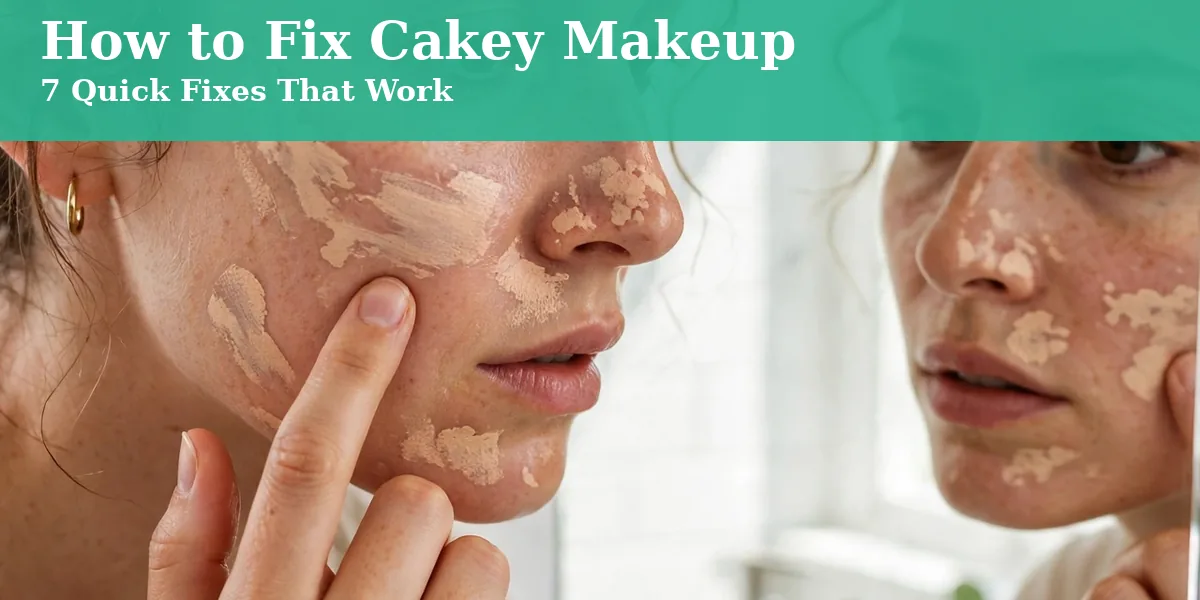
You have just checked the mirror, and your base looks heavy. It sits on your skin, and it shows every dry patch. You do not need to start again from scratch. This guide shows how to fix cakey makeup fast, and how to stop it coming back.
How to Fix Cakey Makeup in Two Minutes
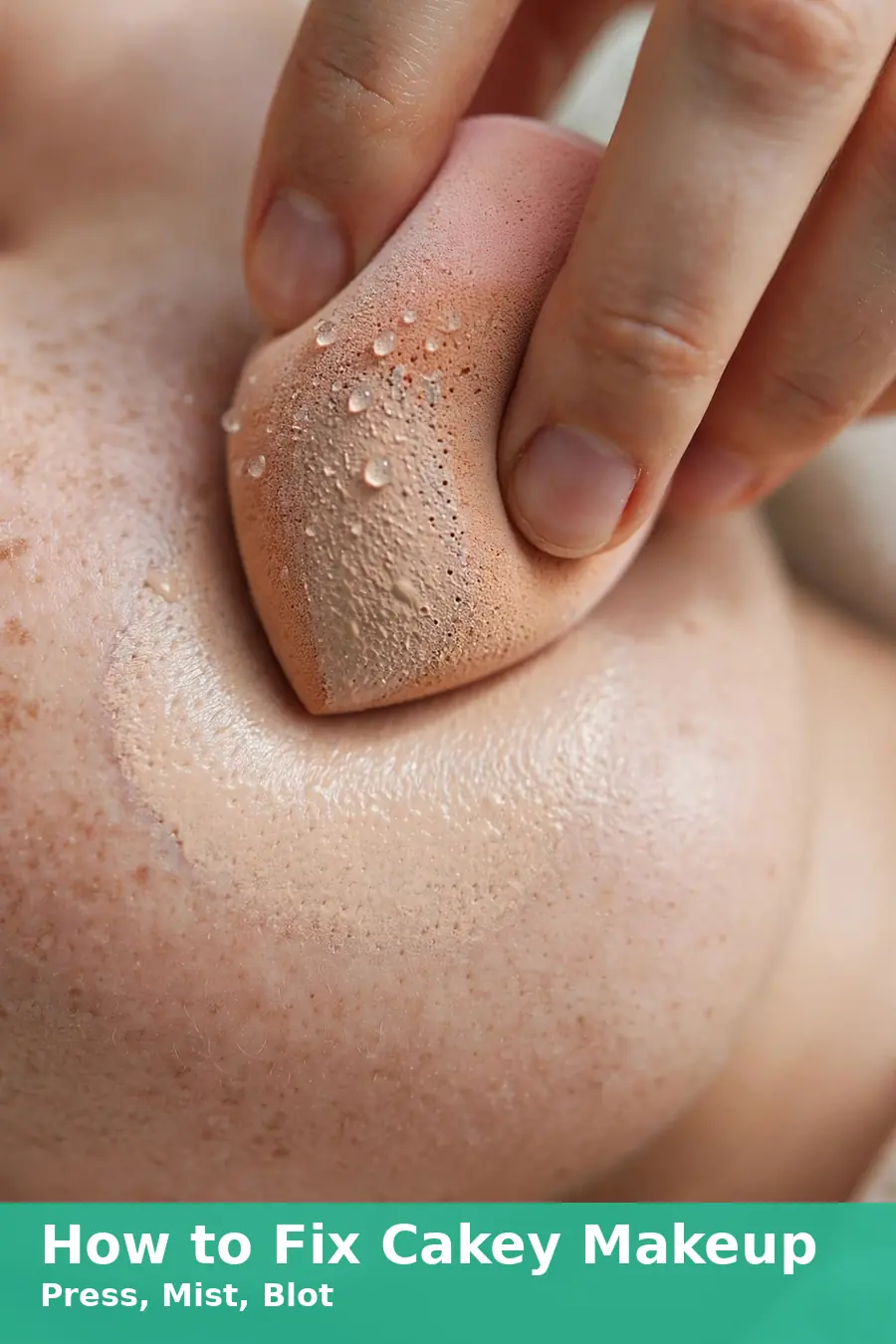
To learn how to fix cakey makeup fast, start with a damp sponge. Then mist lightly, and press again with the sponge. Blot shine with paper, and add no more powder. This rescue takes about two minutes, and it works on most patchy base.
Start with the damp sponge, since it lifts excess product. Wet the sponge, squeeze it well, and bounce it over cakey spots. Do not drag it, since dragging moves base and leaves streaks. Press, lift, and press again, until the surface looks softer.
Mist comes next, but keep it light and even. Hold the bottle at arm length, and spray once or twice only. Wait a few seconds, then press with the sponge again. The mist softens dry layers, and the press melts them into skin.
If shine shows through, blot it instead of powdering it. Press blotting paper on the shiny spot, and lift it away. Powder on top of oil often turns patchy again by midday. A blot removes oil, and it leaves your base intact.
At a Glance
| Step | What to do | Why it helps |
|---|---|---|
| Press | Bounce a damp sponge over heavy spots | Lifts excess and blends base |
| Mist | Spray lightly, then press again | Softens dry, powdery layers |
| Blot | Press paper on shine, then lift | Removes oil with no new product |
| Stop | Add nothing else for now | More product adds more texture |
Why Makeup Turns Cakey in the First Place
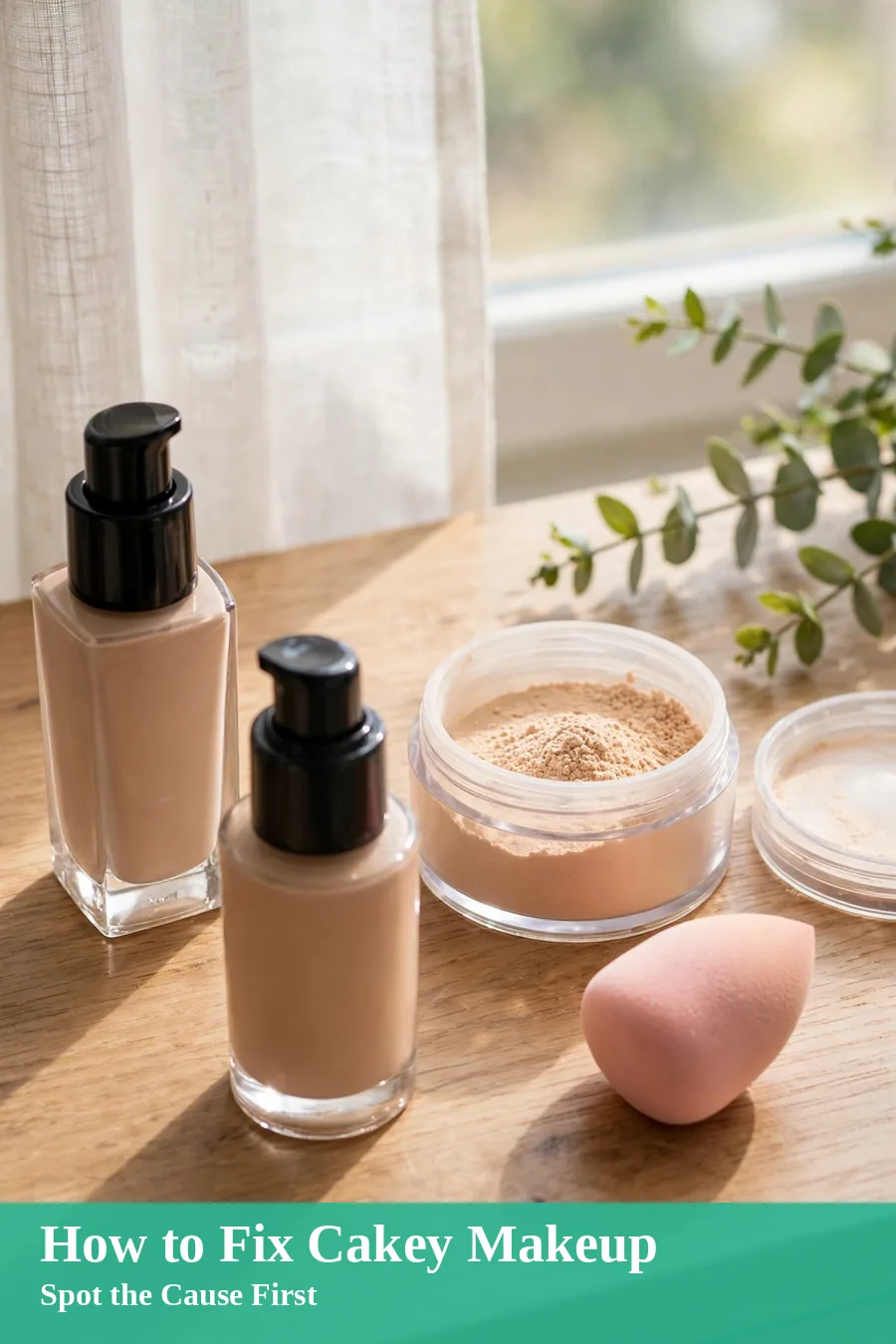
Learning how to fix cakey makeup starts with its causes. Dry or flaky skin gives base rough ground to sit on. Products that clash can separate on skin, and they leave patchy gaps. A wrong formula for your skin type can also sit badly all day.
Dry skin is a frequent cause in cold months, and in heated rooms. Flakes catch powder, and powder makes flakes stand out more. Oily skin can cake too, when powder mixes with oil by midday. The result looks heavy, even when you used very little product.
Layering too fast is another common cause of cakey base. Each layer needs a short pause, so it can settle on skin. Wet layers under dry powder can shift, and they can clump. Skipping that pause often shows up as texture by lunch.
| Cause | Sign you can see | First fix to try |
|---|---|---|
| Dry or flaky skin | Powder clings to dry patches | Moisturise, then wait before base |
| Too much product | Thick lines near nose and jaw | Press with a damp sponge |
| Clashing products | Base separates into small gaps | Use fewer layers next time |
| Too much powder | Chalky finish in daylight | Blot, mist, and press gently |
Prep Your Skin So Base Sits Smoothly
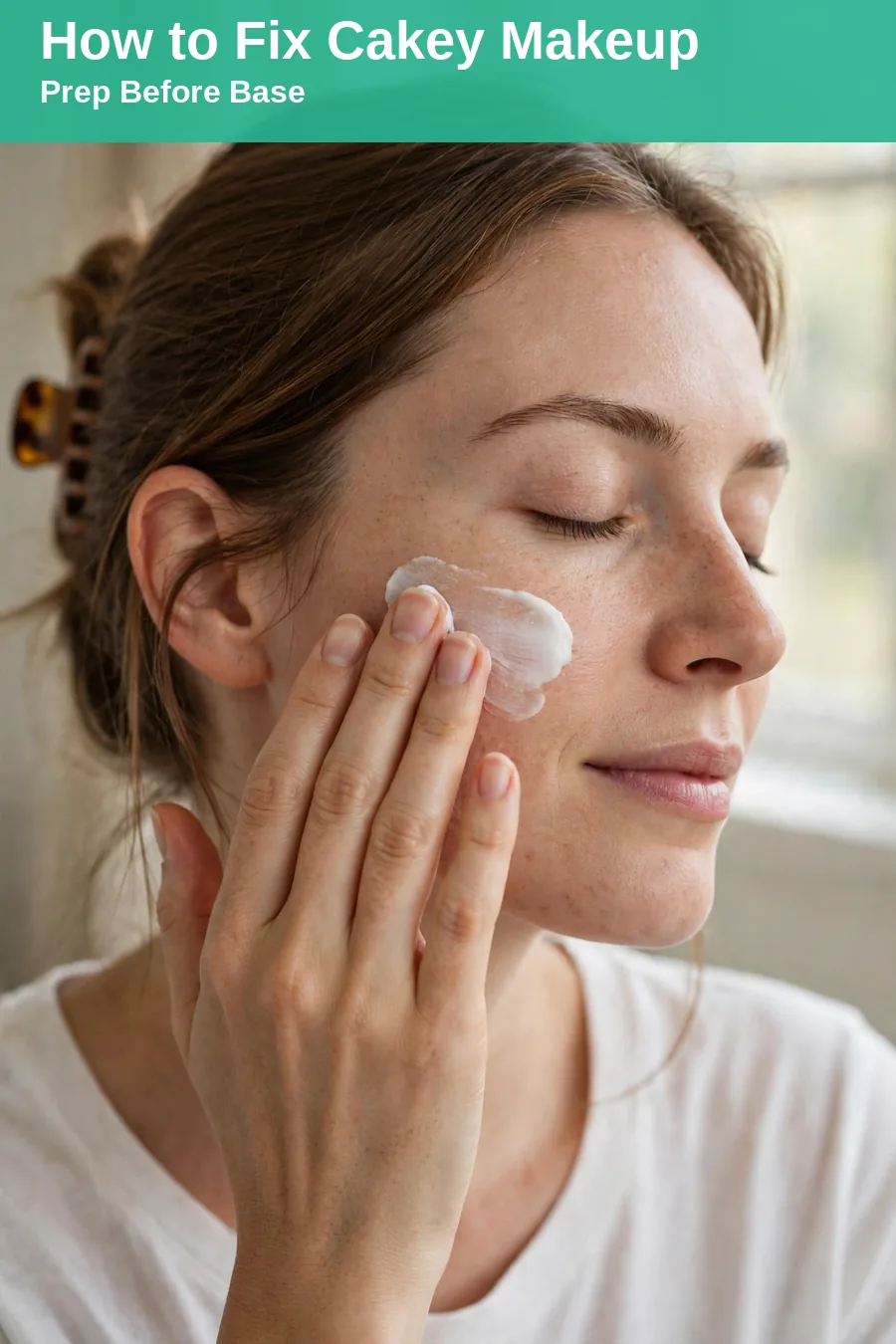
Good prep gives base smooth ground, and it takes only a few minutes. Cleanse gently, then moisturise with a product that suits your skin. Wait until each layer feels settled, and feels dry to touch. Then prime only where you need it, such as the T zone.
For dry skin, pick a richer moisturiser, and give it time to sink in. For oily skin, pick a light lotion, and skip heavy creams. A daily routine helps here, since steady skin care beats rushed fixes. The American Academy of Dermatology skin care basics also stress gentle cleansing and daily sun protection.
Exfoliate gently, and only when skin feels rough or flaky. A soft washcloth can lift flakes, with no harsh scrub needed. Do this the night before, not right before makeup. Freshly scrubbed skin can sting, and it can reject base.
- Cleanse with lukewarm water, and pat skin dry softly.
- Moisturise for your skin type, and wait two minutes.
- Prime the T zone only, and skip primer elsewhere.
- Apply sunscreen in the morning, and let it settle too.
Apply Thin Layers That Blend, Not Build Up
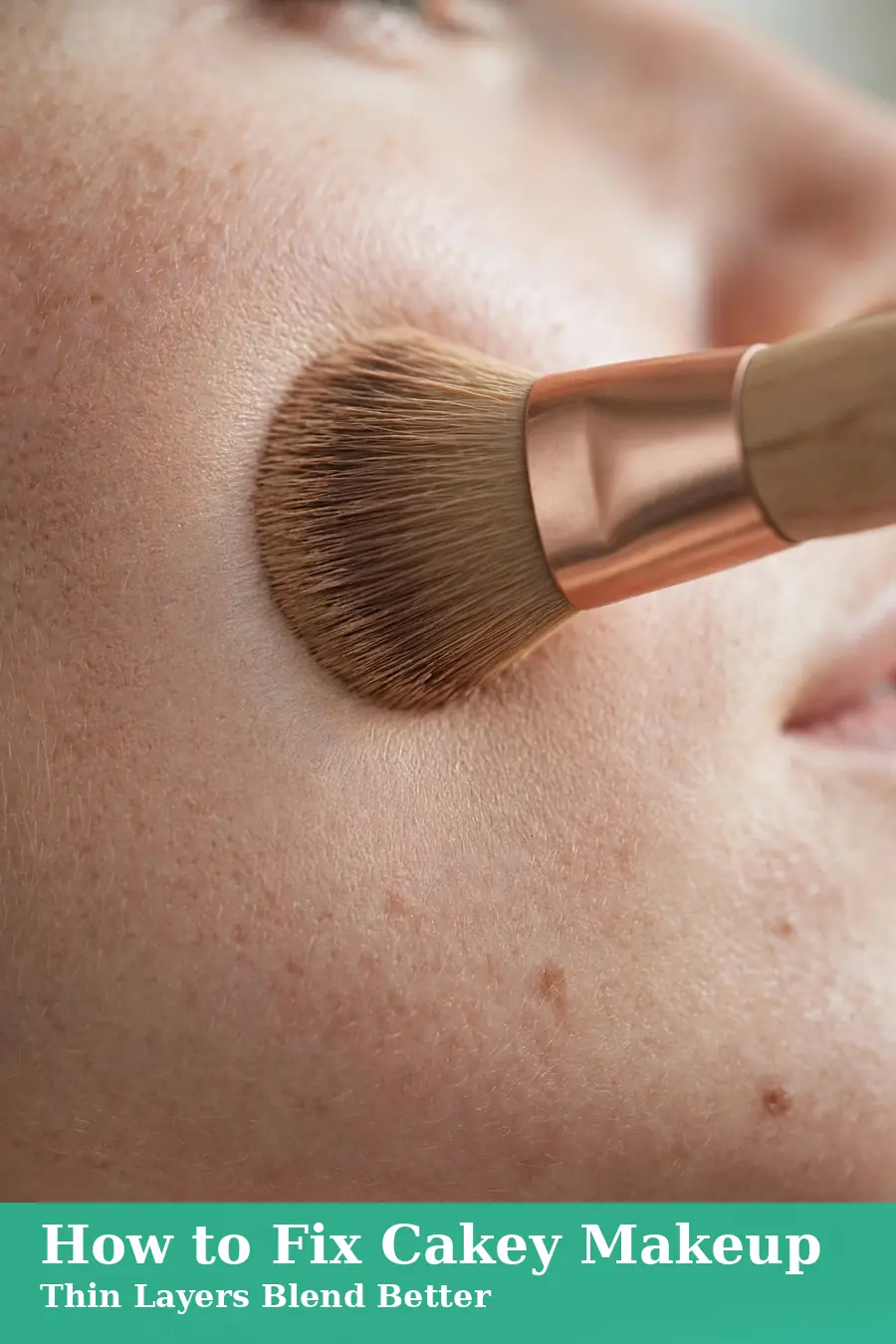
Thin layers are central to how to fix cakey makeup for good. Start with a small dot of foundation, and blend it out well. Add more only where you still see redness or uneven tone. Spot conceal those areas, and leave the rest of your face alone.
Use a damp sponge or a dense brush, and press product in. Stipple with short taps, and avoid long dragging strokes. Dragging lifts base off skin, and it leaves visible streaks. Pressing pushes product into skin, and it keeps coverage even.
Powder needs the same light hand, and only where shine appears. Press a small amount on the T zone, with a fluffy brush. Skip powder on dry cheeks, since it shows flakes there. Check your base in daylight, since indoor light can hide texture.
- Dot a small amount of foundation on the centre of your face.
- Blend outwards with taps, and stop at the jawline.
- Spot conceal redness, and blend each dot at its edge.
- Powder the T zone lightly, and leave dry areas bare.
Fix Cakey Spots by Area: Eyes, Nose and Smile Lines
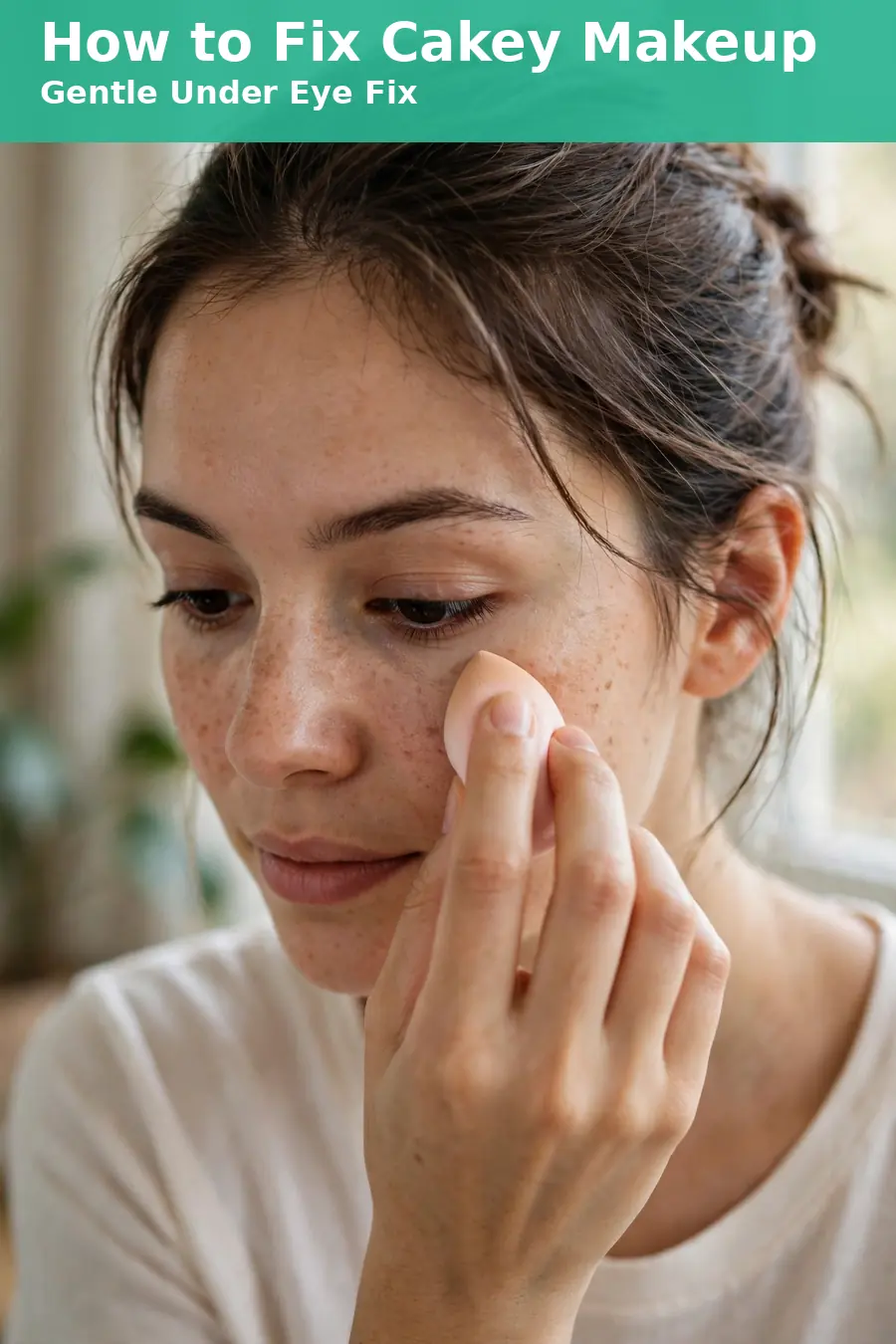
Knowing how to fix cakey makeup by area saves time each morning. Under the eyes, thick concealer settles into fine lines fast. Around the nose, product gathers in creases, and in dry skin folds. Smile lines trap layers too, since skin moves there all day.
For under eye creases, lift excess with a damp sponge first. Then tap a tiny dot of eye cream, and blend it softly. Use less concealer next time, and set it with almost no powder. A thick under eye layer rarely lasts past midday.
For the nose and smile lines, blot first, and then press gently. Do not add fresh foundation on top of a crease. Fresh layers sit on old layers, and they cake faster. Pressing melts the old layer back, and it smooths the line.
- Under eyes: lift excess, tap cream, and use less concealer.
- Nose creases: blot oil, press with a sponge, and add nothing.
- Smile lines: press after smiling, and check in daylight.
- Oily zones: blot with paper, since powder adds texture.
Stop Cakey Makeup Coming Back Tomorrow
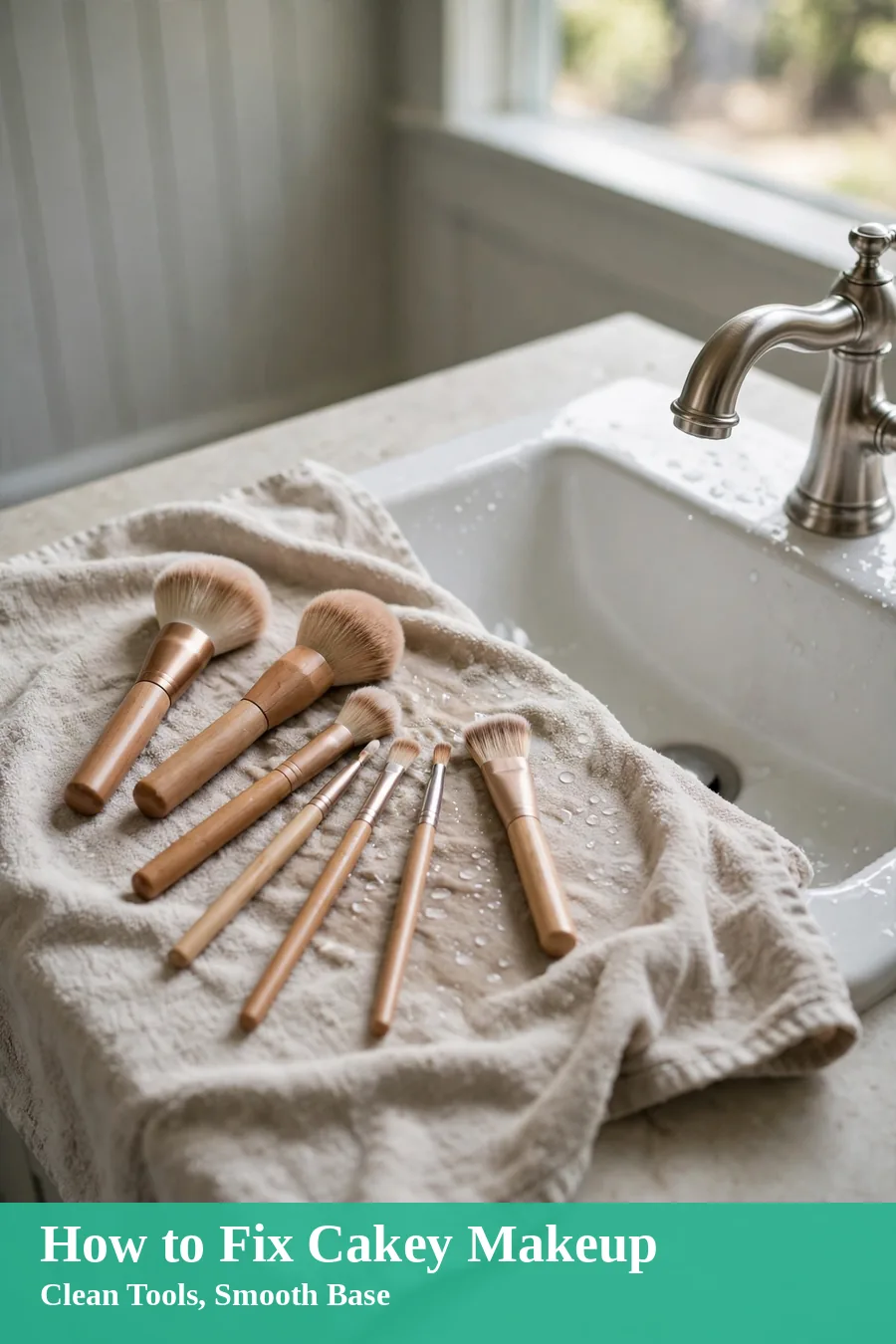
Knowing how to fix cakey makeup tomorrow starts with tools and habits today. Wash brushes and sponges each week, since dirty tools spread old product. Store creams with lids on, and check dates on opened products. Old products can change texture, and they can irritate skin.
Match your formula to your skin, and to the season you live in. Dry winter skin often needs a cream base, and less powder. Warm summer skin often needs a lighter base, and blotting paper. A pack light guide helps on trips, since travel kits need small tools too.
Watch for skin that stays sore, cracked, or red for days. That may need care beyond makeup, and not another product layer. Ask a pharmacist or GP if soreness keeps coming back. If a product caused a bad reaction, check UK consumer rights before you throw it away.
| Habit | How often | What it prevents |
|---|---|---|
| Wash brushes and sponges | Each week | Old product and patchy blending |
| Check product dates | Each month | Changed texture and skin irritation |
| Blot on the go | When shine shows | Powder build up by midday |
| Review your base | Each season | Wrong formula for new weather |
Cakey Makeup Questions Readers Ask Most
How do I fix cakey makeup without removing it all?
To learn how to fix cakey makeup without a full removal, press a damp sponge first. Mist lightly, press again, and blot any shine with paper. Add no new powder or foundation on top of old layers. This rescue smooths most base in about two minutes.
Why does my makeup look cakey by midday?
Midday cakey base often comes from powder mixing with skin oil. It can also come from layers that never settled in the morning. Blot oil first, then press with a damp sponge. Use less powder next time, and only on shiny zones.
Does setting spray help cakey makeup or make it worse?
A light setting spray can help, when you mist from arm length. It softens dry layers, and it melts them into skin. Heavy sprays can add shine, and they can move base. Spray once or twice, and press gently after it settles.
How can I stop foundation settling into fine lines?
Use less product near lines, and blend it very thin there. Press with a damp sponge, and skip powder on those areas. Thick layers settle faster, and they show lines more clearly. Thin layers move with skin, and they look softer.
Should I use powder if my skin is dry?
Dry skin rarely needs powder, except on a shiny T zone. Powder on dry cheeks shows flakes, and it adds chalky texture. Blot shine instead, or skip powder on dry areas entirely. A light mist often suits dry skin far better.
What if my skin stays sore under makeup?
Stop new products, and return to gentle cleansing and moisturiser only. Do not cover soreness with thick layers of base. Sore, cracked, or red skin that lasts needs proper advice. Ask a pharmacist or GP, and note which product you used.
Your Next Makeup Day Can Look Completely Different
A smooth base comes from small habits, not from more products. Fix heavy spots with a damp sponge, and a light mist. Your mirror check tomorrow can look calmer, softer, and far more natural. Start with one change in how to fix cakey makeup, and keep it for a week.
