
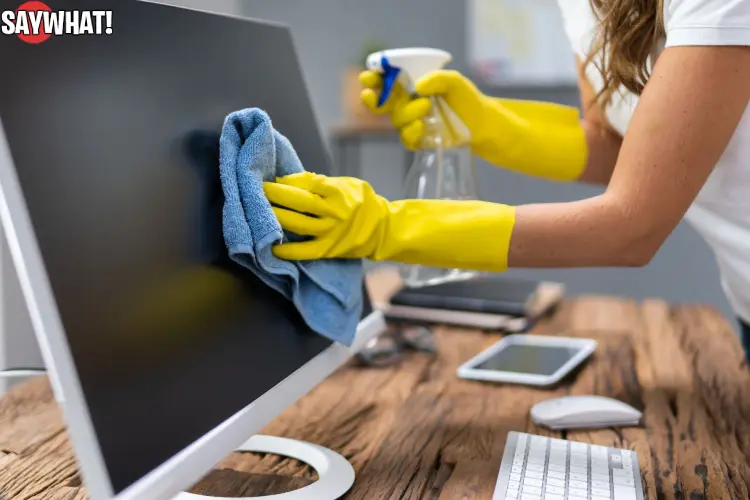
The spots most commonly missed by office cleaners are underneath heavy furniture, computer keyboards, door handles, the inside of breakroom fridges, and the bottom of waste bins. These forgotten zones harbour dust mites that trigger asthma and bacteria that spread winter flu across your team. Assuming a quick vacuum and an empty bin equate to a healthy workspace is a common misconception.
Walking into a freshly hoovered office smells great, but hygiene goes beyond what is immediately visible. We spend a significant portion of our lives at our desks, breathing in whatever is in the air. Despite the UK cleaning sector employing over 1.5 million people to keep spaces safe, certain critical areas still get completely ignored.
Facility management practices often reveal gaps in the exact same places.
Underneath the heavy office furniture
Desks, filing cabinets, and massive standalone printers are remarkably heavy. Cleaners often bypass them because moving solid furniture requires time and effort that a rushed evening schedule rarely allows.
Spaces under these heavy items are magnets for dust and crumbs. Dust mites thrive in these dark, forgotten corners, triggering severe allergies for staff sitting nearby. Without dedicated attention, a thick layer of fluff can easily accumulate along skirting boards.
A quick run around the walkways ignores the actual problem entirely.
Professional services periodically move furniture and use HEPA filters to trap allergens rather than recirculating dust into the air. The British Cleaning Council regularly highlights how proper daytime cleaning improves staff wellbeing. Additionally, the tangle of cables under desks traps an unbelievable amount of dirt and requires targeted cleaning.
The grime on computer keyboards
Keyboards and mice trap germs from constant daily use. Studies consistently show that keyboards contain about 400 times more bacteria than a toilet seat. Eating lunch at desks and regular typing quickly compound this issue.
Shared equipment like photocopiers spread bacteria incredibly fast, creating a perfect transmission chain. Electronics-safe sanitising products are necessary to stop this cycle, as a damp cloth just pushes dirt around and risks damaging circuit boards. COSHH regulations ensure safe chemical use on all these sensitive touchpoints.
Office Managers often avoid cleaning tech for fear of breaking expensive equipment. However, ignoring it completely means your team is sharing every bug circulating the building. Many modern workplaces are starting to use UV sanitisers for keyboards—a technology already used by about 50 percent of hospitals for infection control.
Light switches and regular door handles
Light switches, door handles, and lift buttons are touched constantly throughout the day by almost everyone in the building.
Stair handrails are prime hotspots for germ transmission during flu season. Bacteria like E. coli and Staphylococcus survive on these hard surfaces for much longer than expected. This contributes to the massive £1.35 billion UK firms lose to flu absences annually. Sickness absence costs UK businesses around £29 billion overall every single year.
Daytime cleaning is becoming increasingly popular in London to tackle this issue. Around 55 percent of London office buildings now use daytime staff to wipe down high-touch points, cutting down transmission rates massively. Interrupting the germ cycle during the day is highly effective, whereas night cleaning leaves handles contaminated for the entire working day.
It is a simple issue to fix with alcohol-free wipes.
Breakrooms and the dreaded office fridge
Fridges breed bacteria and mould from forgotten food and spills. Accommodating everyone’s lunch habits in a shared space is challenging, and things get messy fast.
The microwave situation
Microwave handles and coffee machine buttons see heavy use but rarely receive a proper wash. Sticky residues build up rapidly, leading to unpleasant odours that linger in the workspace.
Monthly interior fridge washes prevent serious health risks and stop breeding grounds for illness. Enzyme cleaners are essential to break down food residues safely without leaving harsh chemical smells behind. A quick wipe with a paper towel does nothing to stop mould spores from spreading to fresh food.
Waste bins and recycling stations
Bins are emptied daily, but the insides are rarely washed.
This leads to a buildup of bacteria and sticky liquids at the bottom. Smells start to attract pests if left untreated. With the new ‘Simpler Recycling’ rules coming to UK workplaces by 2026, separating paper, plastic, metal, glass, and food waste will make bin hygiene even more critical. Food waste bins, in particular, will require strict maintenance.
Washing the plastic bin weekly reduces bacteria buildup by about 90 percent. Most standard contracts merely swap the plastic bag and ignore the residue underneath, which ruins the atmosphere of the room.
Extended Producer Responsibility rules are pushing greener practices, highlighting the need to maintain recycling stations properly.
Why standard daily vacuuming falls short
Dusting desks and hoovering the main carpet paths looks nice, but it only gives the illusion of cleanliness.
The reality is that hidden allergens and shared touchpoints do the real damage to workplace productivity. With 1 in 11 UK adults suffering from asthma, those ignored corners under the filing cabinets matter significantly. A surface might look perfectly fine while hosting millions of viral particles. There has been a 25 percent rise in demand for specialised disinfection since 2020 as business owners realise that looking clean is not the same as being clean.
Facilities Management teams often rely on tracking software to identify missed areas, which usually point straight to breakrooms and bins. Using microfiber technology reduces chemical use by a quarter while picking up more dirt. Eco-friendly products are seeing a 12 percent year-on-year growth because they reduce allergens without harsh bleach fumes. Technology adoption is also surging, with the UK cleaning robot market growing at an 18 percent CAGR and 30 percent of firms using automated floor scrubbers to reach difficult spots under furniture.
A quick vacuum just moves the air around. You need a targeted approach.
The Bottom Line
Tackling these hidden hygiene risks requires more than just a quick daily vacuum. Sickness absence hits small businesses incredibly hard. Keeping the team healthy means looking beyond the obvious open spaces.
If your workplace is struggling to maintain high standards, partnering with specialists in commercial cleaning London can ensure every corner of your office remains safe, fresh, and productive for your team. You need people who know to look under the desks and wipe down the printer buttons.
Since we spend so much time at work, it makes sense to keep the environment as healthy as possible. Take a look under your desk tomorrow morning—you might be surprised by what you find.
