
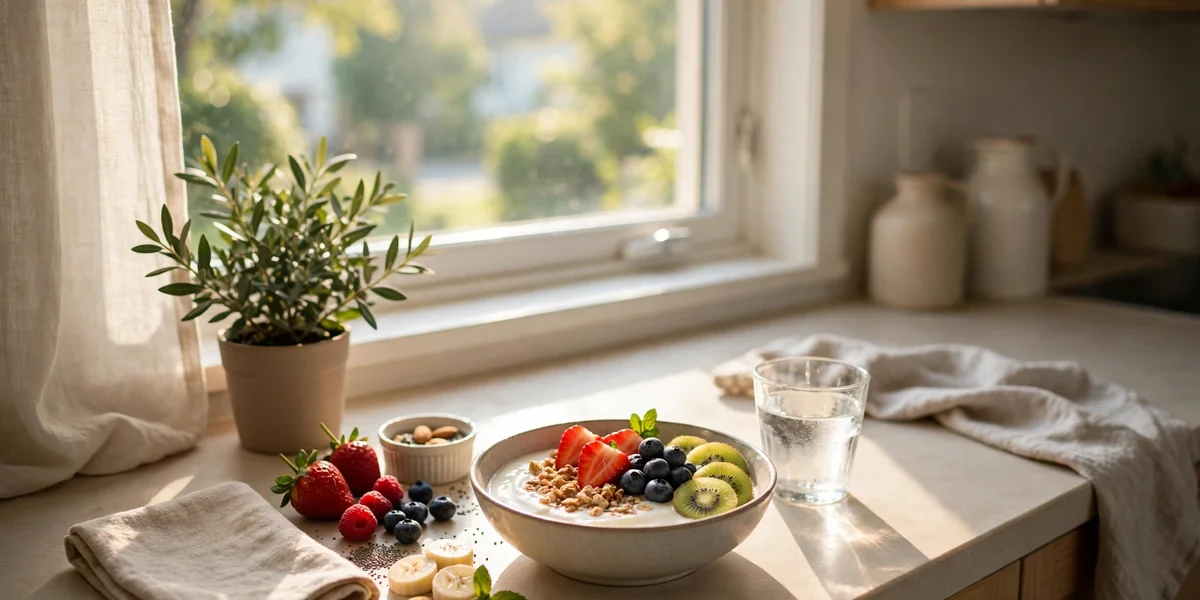
The short answer to how to build a healthier daily routine is simple. Pick three small anchors for morning, midday, and evening. Repeat them each day for two weeks before you add more. That is the whole method, and it fits real life.
Most routines fail because they try to change everything at once. A new wake time, a new workout, and a new diet all start Monday. By Wednesday the plan feels like a second job. By Friday it is gone, and guilt takes its place.
This guide takes the opposite path, one layer at a time. You start with sleep and mornings, then add movement and food. Each part gives you one habit to try at your pace. Nothing here needs special gear, strict diets, or big spending.
Key Takeaways:
- Three anchors beat ten new habits.
- Sleep first, mornings second, movement third.
- Keep meals simple and regular each day.
- Short breaks protect focus better than long hours.
- Review once a week, then adjust one thing.
How to Build a Healthier Daily Routine, Step by Step
A good routine has five parts you can build slowly. They are steady sleep, calm mornings, movement, simple food, and rest. You do not need to perfect all five at once. Pick the easiest part first and let early wins build trust.
- Steady sleep and a regular wake time.
- A calm morning anchor under ten minutes.
- Movement spread through the day.
- Simple meals at regular times.
- A wind down evening for better sleep.
Learning how to build a healthier daily routine is really about learning your own rhythms. Some people focus best early, others after lunch daily. Some love a morning walk, others prefer evening stretches. Match the routine to your energy, job, and home life.
Pick your three anchors first
An anchor is one small habit tied to a time of day. Morning anchors could be water, daylight, or a short stretch. Midday anchors could be a walk, water, or a screen break. Evening anchors could be reading, stretching, or herbal tea.
Map your real day before you change it
Write down your current day in plain words first. Note when you wake, eat, work, rest, and sleep. Look for one or two pressure points, like late nights. Fix those first, since they give the biggest return.
Start With Sleep, Because Mornings Begin the Night Before
Sleep is the base for every other healthy habit. Poor sleep drains willpower and makes small tasks feel hard. Good sleep makes the rest of your routine feel easier. This guide covers general habits only, not medical advice.
Keep one steady wake time
Aim for the same wake time each day, weekends included. Keep weekend shifts small, about one hour at most. If your wake time jumps around, move it slowly instead. Shift by about 15 minutes every few days, not all at once.
Build a 30-minute wind down
Use the last 30 minutes before bed to slow down. Dim the lights and put your phone on charge outside. Read, stretch, or take a warm shower to unwind. Skip bright screens and heavy meals late at night.
- Lights low, phone out of reach.
- One calm activity, same time nightly.
- Herbal tea or water, no caffeine.
- If sleep stays poor for weeks, talk to a doctor.
Build a Morning Anchor You Actually Enjoy
Your morning anchor is the first healthy choice of day. It should take ten minutes or less, every single day. The exact habit matters less than doing it daily. A small win early sets a calm tone for hours.
Daylight before phone
Step outside for a few minutes, or sit near a window. Morning light helps your body clock stay on track. Pair light with your anchor so one triggers the next. Leave your phone on silent until the anchor is done.
Keep breakfast simple and satisfying
Fruit with yoghurt, toast with eggs, or porridge all work. Aim for a meal that keeps you going until lunch. If you are not hungry first thing, eat a little later. A perfect breakfast that takes 40 minutes will not last.

Move a Little, Often, Instead of Waiting for a Big Workout
Movement does not have to mean a gym session. Walking, stretching, gardening, and stairs all count as movement. Spread movement through the day, not in one hard burst. Small steps added slowly last longer than sudden bursts.
Use breaks as movement triggers
Stand up and stretch each hour if you sit for work. Walk while you take a phone call, when you can. Park further away, or leave the bus one stop early. These small choices break long sitting stretches that stiffen you.
- Ten minute walk after lunch.
- Five minute stretch in the evening.
- Dance in the kitchen, swim, cycle, or garden.
- A walk with a friend counts too.
Pick movement you enjoy
Enjoyment is what makes a habit repeatable over months. If you hate running, do not build your routine around it. Try swimming, cycling, dancing, yoga, or a friendly walk. A routine built on fun needs far less willpower daily.

Eat Simply, Drink Water, and Keep Meals Regular
Healthy eating is mostly about regularity and simple choices. Eat at roughly the same times each day, portions sensible. Include vegetables or fruit with most meals you eat. You do not need a complex meal plan to eat well.
Plan one default meal
Pick one or two easy meals you can make without thinking. A simple soup, stir fry, or salad with bread works. A default meal stops skipped dinners and snack-only nights. Keep water nearby and drink when you feel thirsty.
- Soup with bread on busy nights.
- Stir fry with rice, quick and filling.
- Salad with eggs or beans for lunch.
- Sugary drinks as treats, not daily defaults.
A tidy home helps a calm routine in small ways. Clean kitchens and handled laundry cut daily friction fast. Our guide to cleaning a washing machine shows one small job. Our notes on elegance in simplicity show how less stuff calms a home.
This guide sticks to general, everyday habits for healthy adults. It is not a substitute for personal medical or dietary advice. For bigger changes, ask a qualified health professional first.
Protect Your Focus With Short, Planned Breaks
A healthier day is not only about the body. Constant switching between tasks and messages tires most people. Even easy work feels hard when attention keeps splitting. Short, planned breaks protect focus far better than pushing on.
Work in short blocks
Try focused blocks of 25 to 50 minutes, then break. Keep one task open and silence non urgent alerts. During breaks, stand, stretch, drink water, or look outside. You will answer every message, just in calmer batches.
- Phone face down during focused blocks.
- Messages checked in batches between blocks.
- One task open at a time, nothing else.
Close the day cleanly
End work with a clear closing habit each day. Write tomorrow’s top three tasks, tidy your desk, close up. A clear finish helps your mind switch off at night. Digital safety helps too, and our guide to keeping your devices safe covers it.
Design an Evening That Helps You Sleep
Evenings often undo a good day, so guard them. Heavy meals, bright screens, and late caffeine push sleep later. Late sleep makes the next morning harder, then the cycle repeats. A calm evening protects the next day before it starts.
Set a caffeine cut off
If caffeine affects your sleep, set an afternoon cut off. No coffee or strong tea after mid afternoon works well. Try herbal tea or water in the evening instead. Notice within a week or two if sleep improves.
Choose one calm activity
Keep the evening meal lighter than lunch when eating late. Leave time between eating and bed, plus a short walk. Reading, gentle stretching, or music all work as wind downs. The same calm activity nightly tells your body sleep is near.

The Weekly Reset: How a Routine Stays Healthy
Daily habits drift without a weekly check, so review them. Spend ten minutes each week asking what worked and why. Learning how to build a healthier daily routine also means reviewing it weekly. This is maintenance, not a test, so keep it kind.
Plan lighter versions for busy days
Note busy days ahead and choose lighter habit versions. A short walk beats a skipped workout every time. A simple default meal beats no dinner at all. If a habit fails for two honest weeks, change it.
- What worked this week?
- What felt hard, and why?
- One change for next week.
- Devices charged, clothes out, breakfast planned.
A fresh start needs no new month or new year. Our guide to remaking yourself makes the same point well. Small, deliberate changes repeated daily beat dramatic resolutions. Link your reset to that mindset, and setbacks become data.
Troubleshooting: When Your Routine Falls Apart
Every routine falls apart sometimes, and that is normal. Illness, travel, busy work, or family needs can break habits. The recovery plan matters more than the break itself. Restart with one anchor only, not the whole routine.
Restart slowly, then fix the cause
Do just that anchor for three days until it feels steady. Then add the next anchor, one at a time. This slow rebuild is how to build a healthier daily routine that lasts. Ask what failed: too long, too early, or late evenings?
- One anchor for three days.
- Fix the cause, not just the symptom.
- Call a pause a pause, not a failure.
Be kind in the words you use about missed weeks. Calling it a busy week makes restarting far easier. If low mood or constant tiredness lasts weeks, talk to a doctor. Healthy habits help, but they are not treatment for illness.
Frequently Asked Questions
How long does it take to build a healthier daily routine?
Most habits feel easier after two to four weeks daily. Start with one anchor and add more only when steady. Consistency matters more than speed, every single time.
What if I have a very busy or irregular schedule?
Use anchors, not fixed clock times, for each habit. A morning anchor fits whenever you wake up daily. Shorter versions still count on busy days, so use them.
Do I need to wake up early to be healthy?
No, a regular wake time matters more than early. Build around your real sleep pattern, not a 5 am rule. Aim for consistency, enough sleep, and morning daylight daily.
How many new habits should I start at once?
Start with one, or at most three small anchors. Use one each for morning, midday, and evening. Adding too many at once is the top reason routines fail.
What should I do when I miss a day?
Treat it as a normal pause, not a failure. Restart next day with your easiest anchor only. Never double the next day to make up lost habits.
Your Healthier Routine Starts Tomorrow Morning, Not Next Monday
You need no new month, clothes, or app to start. You need one morning anchor, one movement break, one calm evening. That is how to build a healthier daily routine that survives real life. Pick your three anchors tonight, where you will see them.
Start small, keep the routine visible, review weekly. When a habit feels easy, add the next one. When life gets busy, use the lighter version, not none. Start tomorrow morning, and let it grow one anchor daily.
