
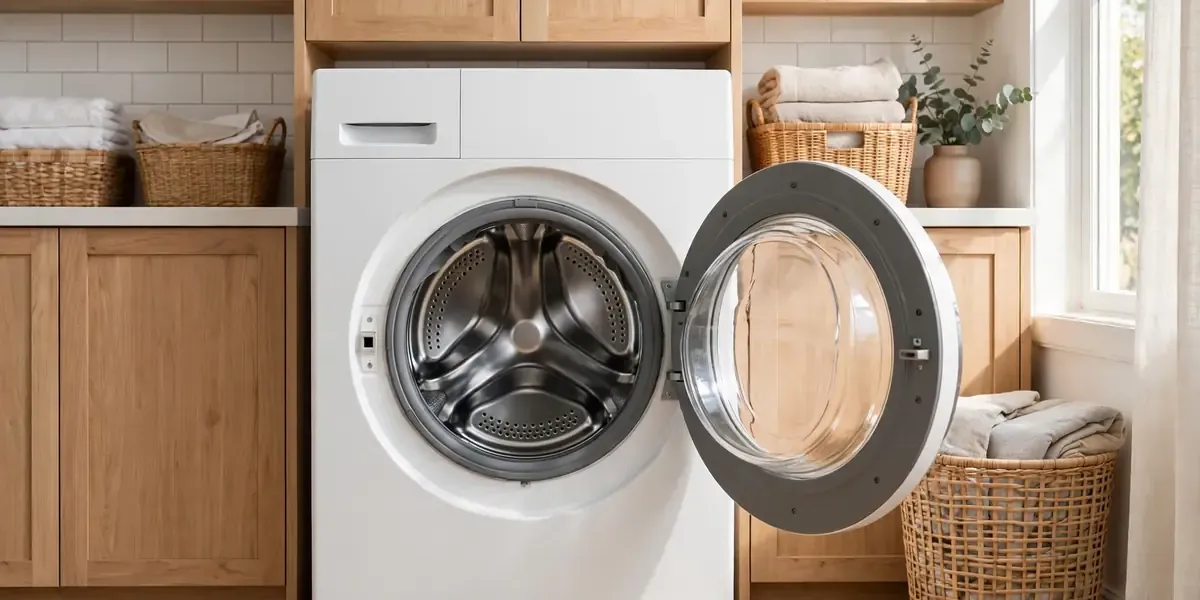
If you’re wondering how to clean a washing machine properly, here’s the short answer: run an empty 90°C cycle with two cups of white vinegar, wipe the rubber door seal and the detergent drawer, and clean the filter. Do the hot cycle once a month, the full clean every three months, and leave the door open after every wash so the drum dries out.
That’s the whole routine. It fixes most smelly washer problems in a single afternoon, and it costs almost nothing.
Nobody buys a washing machine expecting to wash the washing machine. Mine went nearly two years without a proper clean. I only noticed something was wrong when freshly washed towels came out smelling faintly like a damp basement. Sound familiar?
The machine wasn’t broken. It was just dirty in all the places you never look: behind the seal, inside the drawer, down in the filter. Half an hour of hands-on work fixed it completely. The next load smelled like nothing at all, which, for laundry, is exactly right.
How to Clean a Washing Machine, Step by Step
You don’t need special products. Honestly, the fancy washer cleaners on the shelf do the same job as what’s already in your kitchen cupboard, for ten times the price. Grab white vinegar, bicarbonate of soda, an old toothbrush, a cloth, and a towel for the floor.
The towel matters. You’ll see why at the filter step. Skip the bleach for routine cleaning, too. It smells like you’ve done something serious, but it wears rubber seals down over time, and it does nothing about limescale.
Here are the 5 steps, in order: drawer, door seal, hot vinegar cycle, filter, and a quick wipe-down outside. Each one takes a few minutes, and the hot cycle runs itself while you get on with something else. If you’ve never tackled a job like this before, it still counts as one of the simplest DIY home improvement projects for beginners you can do in an afternoon.
Step 1: Start With the Detergent Drawer
Pull the drawer out as far as it goes. Most have a small tab or button that lets you release it fully. Give it a wiggle and it should come free.
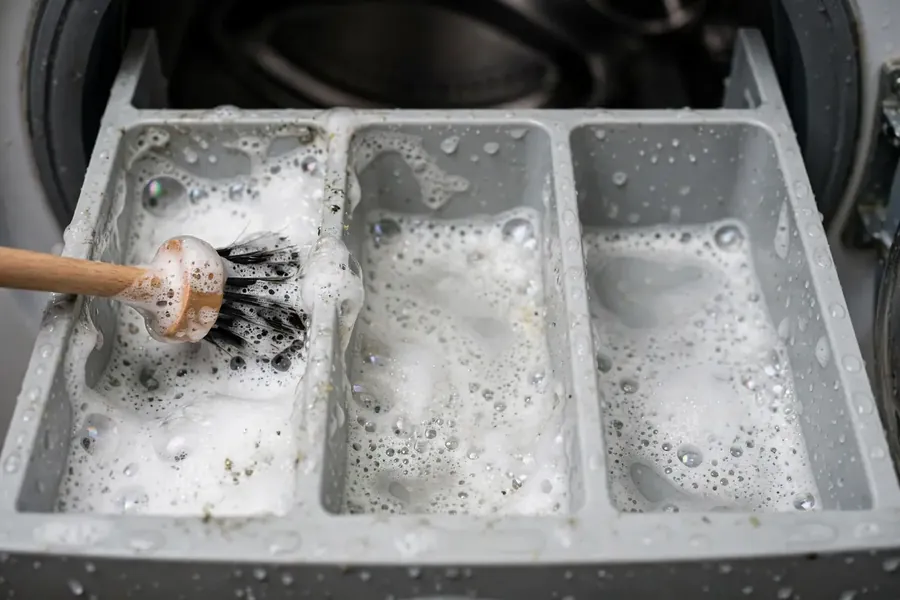
Now look at it properly. See that grey, slimy coating in the corners? That’s old detergent mixed with softener and a bit of mould. It’s been sitting there feeding the damp smell every time you run a wash.
Soak the drawer in warm water for about ten minutes. Then scrub it with the toothbrush, getting right into the corners and the fabric softener compartment. Rinse it and dry it with a cloth.
Then (this is the part people skip) wipe inside the empty drawer housing too. That slot is just as grimy as the drawer itself. Slide the drawer back when both are dry.
If black spots won’t scrub off, try a paste of bicarbonate of soda and a little water. Leave it on for ten minutes. It usually lifts them.
Step 2: Wipe the Door Seal
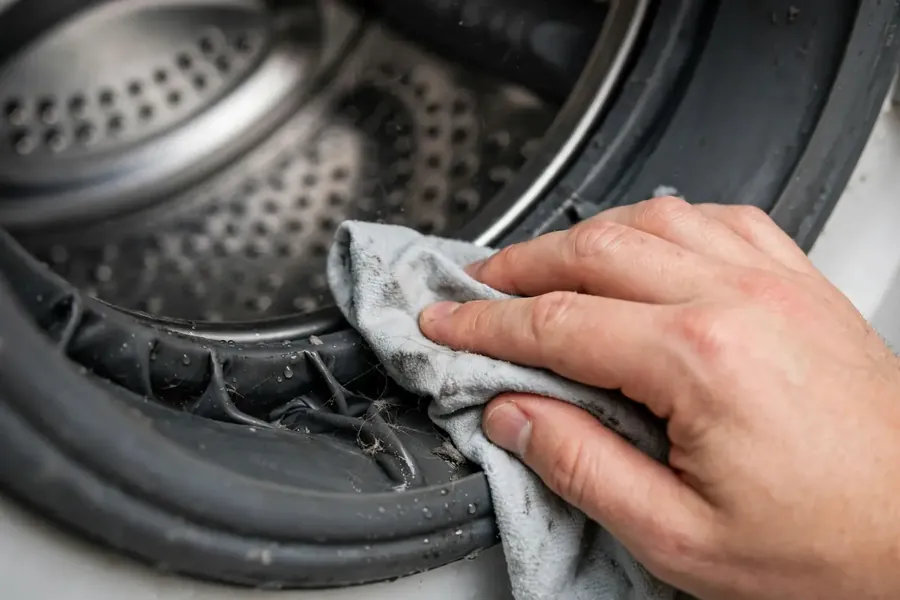
Open the door and pull the rubber seal gently towards you. Look inside the folds. This is where the real horror lives: trapped water, hair, the odd coin, maybe a sock you thought the machine ate.
It’s also where mould in a washing machine seal gets established. That fold stays damp long after the cycle ends. No wonder it smells.
Wipe all the way around with a damp cloth, working through each fold. For black spots, use the same bicarbonate paste as the drawer. Leave it ten minutes, then wipe it off.
One warning: don’t yank the seal. Pull it gently and let it spring back on its own. A torn seal leaks, and a leaking seal turns a thirty minute clean into a repair bill.
Step 3: Run a Hot Vinegar Cycle to Descale the Drum
This is the easiest step, and the one that does the most. Pour two cups of white vinegar straight into the drum, not the drawer. Add half a cup of bicarbonate of soda.
Then run the hottest, longest cycle your machine offers. That’s usually 90°C cotton. Keep the drum completely empty.
Why empty? Because you want the full force of that hot, acidic water working on the machine itself. It dissolves limescale build-up, flushes detergent residue out of the pipes and pump, and kills the bacteria behind the smell. Samsung’s hard-water cleaning guide recommends the same approach: an empty hot cycle with vinegar, then a wipe down inside.
The cycle takes an hour or two depending on your machine. You don’t have to stand there watching it. When it finishes, leave the door wide open for at least an hour. A drum that dries fully between washes is a drum that doesn’t grow things.
If you live in a hard water area, this step matters twice as much. Limescale coats the heating element first. That means your machine works harder, heats slower, and wears out sooner. A monthly hot vinegar cycle is genuinely the cheapest maintenance a washing machine gets.
Step 4: Don’t Skip the Filter
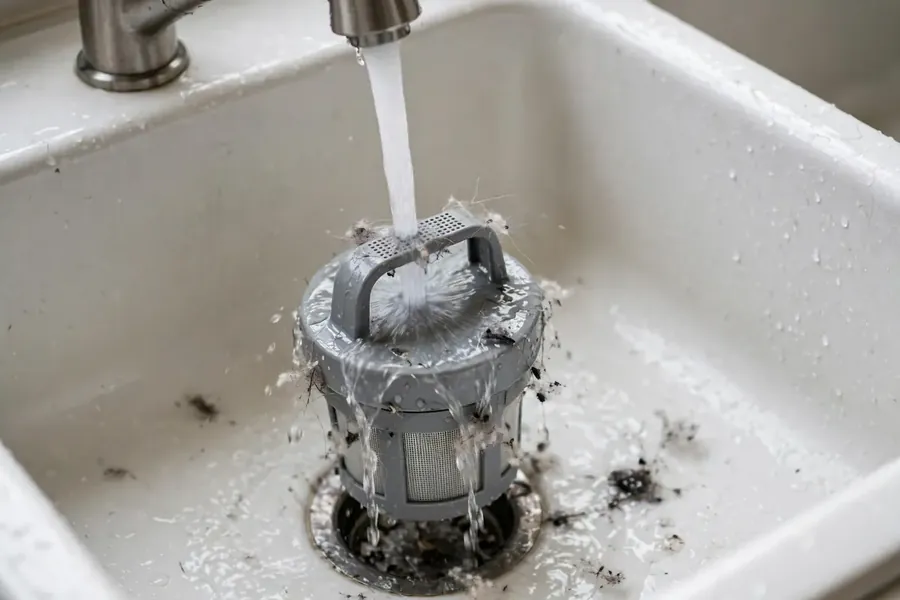
Ask most people where their washing machine filter is and you’ll get a blank stare. It’s usually behind a small flap at the bottom front of the machine. It catches everything the drum lets through: lint, hair, coins, hair grips, the occasional button.
Put your towel down and a shallow bowl under the flap. Then unscrew the filter slowly. Water will come out. That’s normal, and that’s why the towel is there.
Pull out whatever’s trapped and rinse the filter under the tap. Then screw it back in firmly. A blocked filter is behind a surprising number of machines that won’t drain or won’t spin, and people pay call-out fees for it. Five minutes, no tools, problem gone.
Step 5: Wipe Down the Outside
While you’re down there, wipe the flap area and the outside of the machine. Door glass, control panel, top surface. Done. That’s the full deep clean, all five steps.
A Simple Washing Machine Maintenance Routine That Prevents Smells
Here’s the thing most guides get wrong: they treat this as a one-off project. It isn’t. A washer cleaning routine only works if it repeats. But it can be tiny.
- After every wash: leave the door and the drawer slightly open for an hour. This single habit prevents most smells on its own, because mould needs trapped moisture.
- Every month: one hot empty cycle with vinegar. Put it on the same day you do something else monthly, so you actually remember it.
- Every three months: the full clean: drawer, seal, filter, exterior.
That’s it. No weekly scrubbing, no special products, no calendar full of chores. And if you’ve just done the full clean for the first time in ages, set a phone reminder for three months out. Future you will be grateful.
A washer is just one item on a bigger list. If you want the habit to stick, fold it into your regular home maintenance alongside gutters, filters, and smoke alarms. For a wider look at jobs like this around the house, this home improvement guide is a good next read.
Mistakes That Make a Smelly Washer Worse
The biggest one is using too much detergent. More soap does not mean cleaner clothes. It means soap that never fully rinses away, coating the drum and feeding mould.
Use the dose on the packet for your load size and your water hardness. Not a generous extra splash “just in case.”
Second: liquid detergent at low temperatures leaves more residue than powder. If smells keep coming back despite cleaning, switch to powder for your hot washes and see if it changes.
Third: never leave wet laundry sitting in a closed machine for hours. A warm, damp, closed drum is exactly where mildew grows. Once that smell gets into a load of towels, you’ll be washing them twice.
And finally, don’t shut the door straight after a wash out of tidiness. An open door looks slightly untidy for an hour. A closed door grows a science experiment. A well kept machine also protects what your home is worth, which is the same logic behind this guide to increasing your home’s value.
Frequently Asked Questions
Why does my washing machine smell even after a wash?
Usually detergent residue and moisture trapped in the seal and drawer. A hot empty vinegar cycle, plus drying the seal and leaving the door open, fixes it in most cases. If the smell survives two hot cycles, check the filter and the drain hose. A partial blockage can hold stagnant water.
Can I use bleach instead of vinegar to clean my washing machine?
You can occasionally, but it isn’t the best routine choice. Bleach can wear rubber seals over time and it doesn’t remove limescale, which is half the problem in hard-water homes. Vinegar and bicarbonate of soda are gentler and cover both jobs.
How often should I clean my washing machine?
A hot empty cycle once a month, a full clean (drawer, seal, filter) every three months, and the door left open after every wash. In a hard-water area, never skip the monthly cycle, since limescale builds fastest there.
Is it safe to put vinegar in a washing machine?
Yes. White vinegar in an empty hot cycle is safe for modern machines and is widely recommended for descaling. Don’t mix it with bleach, and for this clean pour it straight into the drum rather than the drawer.
Why is there black stuff on my washing machine seal?
That’s mould growing where water sits in the seal folds. It’s common and fixable: bicarbonate paste, ten minutes, wipe clean, then keep the seal dry between washes and leave the door open so it can’t grow back.
Your Next Load Could Smell Brand New: Here’s Your 30-Minute Starting Point
You don’t need a new machine, and you don’t need a weekend project. Drawer out, seal wiped, hot vinegar cycle running, filter rinsed. That’s the whole job. Most of it is the machine doing the work while you do something else.
Do it once today, then let the tiny monthly routine take over. Door open after washes, hot cycle once a month, full clean every three months.
The payoff is immediate and weirdly satisfying. Towels that smell like nothing, a machine that drains properly, and one less appliance quietly getting worse in the corner of the kitchen. Start with the drawer. It’s the worst part, and once you’ve seen what’s been living in there, you’ll never skip this clean again.
