
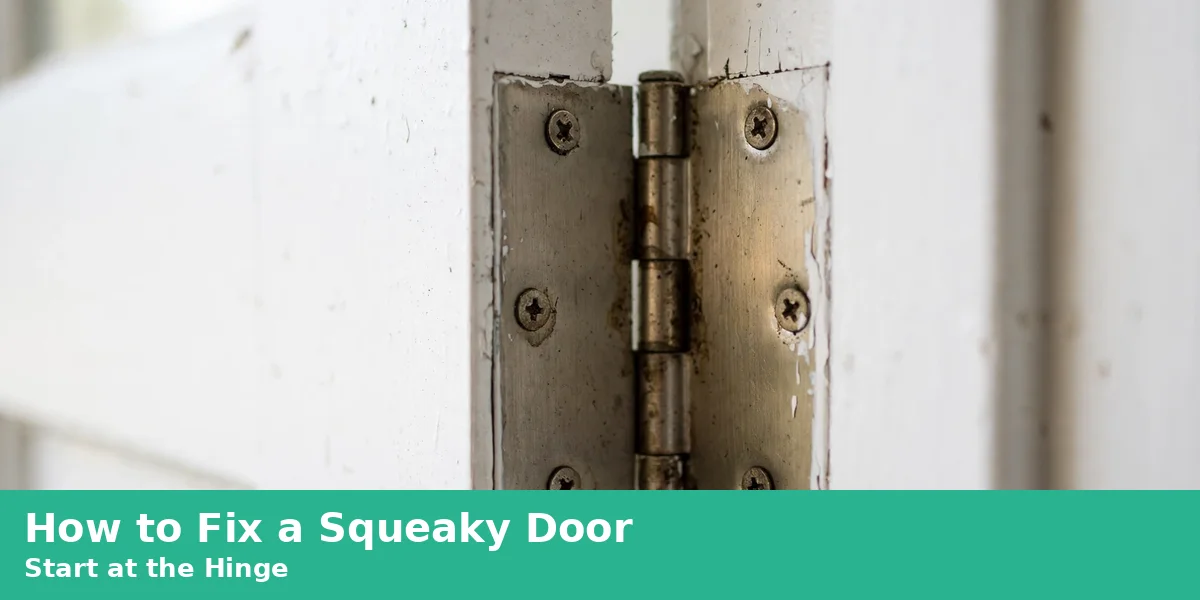
A squeaky door can turn a quiet home into a noisy one. Every trip to the kitchen can bring the same sharp sound. Most squeaks come from dry or dirty hinges, and most fixes take only a few minutes.
This guide shows how to fix a squeaky door without special skills. You will find the source of the noise first. Then you will try the quick fix first. Move to a deeper clean if you need one.
How to Fix a Squeaky Door Quickly
To fix a squeaky door, clean the hinge and add silicone spray. Move the door back and forth to spread the spray well. If noise stays, clean one pin at a time and coat it lightly. This works for most interior doors in most homes.
Start with the hinge that makes the noise, not all three at once. Work on one hinge, test the door, and then move on. This saves time, and it shows you which hinge caused the trouble.
- A can of silicone spray or white lithium grease
- An old rag and a small brush
- A hammer and a nail or a punch
- Fine steel wool for rust or grime
- A screwdriver that fits your hinge screws
The Short Version: find the loud hinge first. Clean dust and grime from that hinge and its pin. Add a light coat of silicone spray or lithium grease. Move the door back and forth to spread the lubricant well.
Find Where the Squeak Comes From
Open and close the door slowly, and listen with care. Put your ear near each hinge in turn. The loudest hinge is often the one that needs help. A helper can move the door while you listen.
Watch the door edge as it moves through the frame. A door that rubs the frame can squeak even with clean hinges. Look for shiny marks or worn paint where wood meets wood.
Check the screws on each hinge plate as well. A loose screw lets the door drop a little, and that shift can cause a rub. Tighten loose screws by hand first, and stop if a screw turns without grip.
Try the Quick Spray Fix First
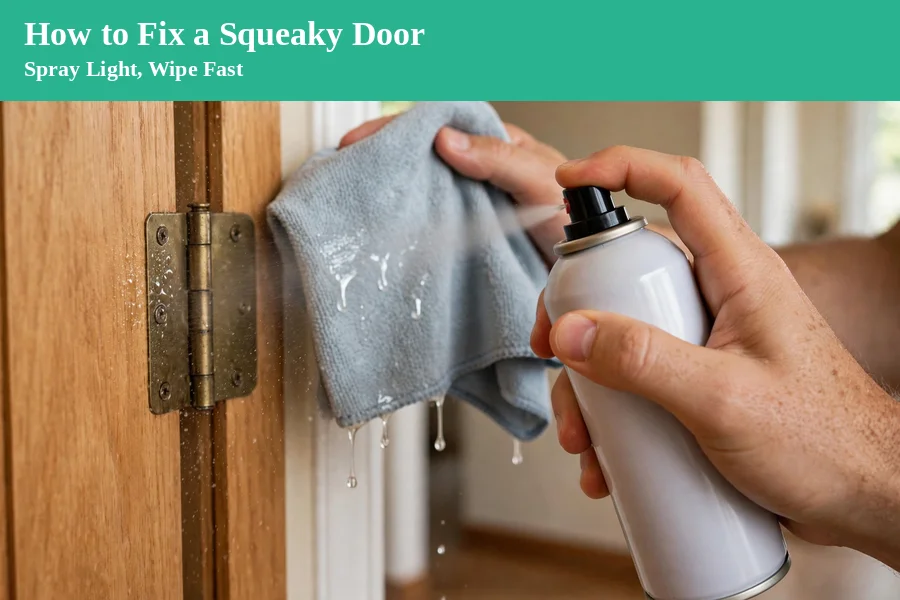
Hold a rag behind the hinge to catch drips. Spray a small amount into the hinge knuckles, which are small cylinders around the pin. Move the door back and forth ten times to work it inside.
Wipe off extra lubricant right away, and check the floor for drips. A light coat works better than a heavy soak. Too much spray can trap dust, and that dust can bring the squeak back. Keep the rag close for each hinge you spray.
This quick step in how to fix a squeaky door suits a mild squeak best. Test each hinge on its own after you spray it. If one hinge goes quiet, you have found your source.
Remove and Clean the Hinge Pins
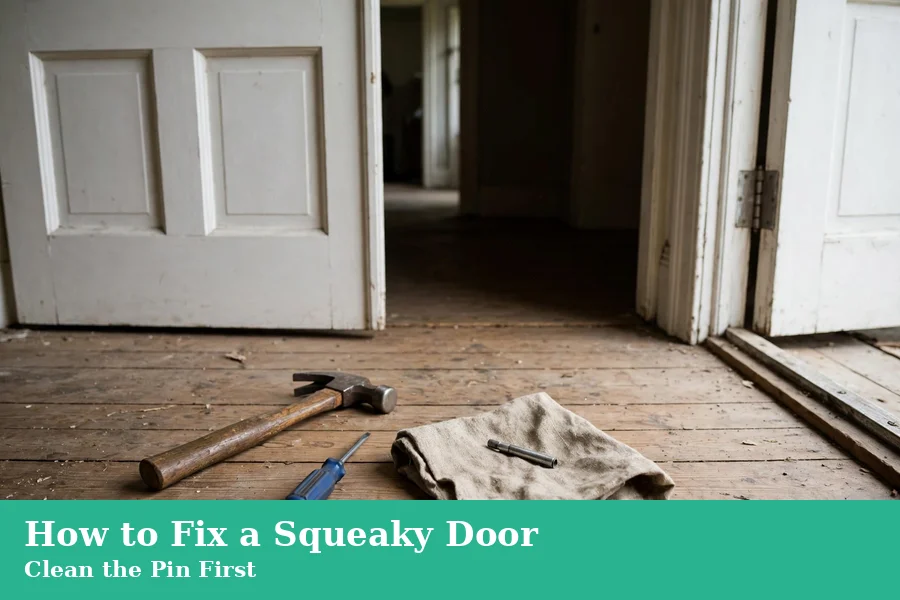
Work on one hinge at a time, so the door stays in place. A helper can hold the door steady while you work. This step takes a little longer, but it gives a much longer lasting result.
Tap the pin up from below with a hammer and a nail. Pull it out with care, and lay it on a rag. Clean the pin with steel wool if you see rust, and wipe the hinge knuckles clean.
- Tap one pin up from below, and pull it out.
- Clean the pin, and wipe inside the hinge knuckles.
- Coat the pin with a light layer of grease.
- Push the pin back in, and tap it down gently.
- Move the door, and repeat for the next hinge.
A drill attachments guide can help if you plan more home jobs. For hinge screws, a hand screwdriver gives you more control. Power tools can strip small screws fast, so use them with care. A clean work area makes the job much easier.
Pick the Right Lubricant for Door Hinges
Silicone spray suits most interior doors, and it stays cleaner than thick oil. White lithium grease lasts longer, and it suits doors that get used a lot. Both beat a quick spray of multi use product for a lasting fix.
Household oil can work for a short time, but it can attract dust. Petroleum jelly can quiet a hinge, yet it can feel sticky in warm rooms. A hinge guide from Schlage notes a precise spray helps lubricant reach the pin.
| Lubricant | Best for | Lasting power |
|---|---|---|
| Silicone spray | Most interior doors | Good |
| White lithium grease | Busy doors | Long |
| Household oil | A quick short term fix | Short |
| Petroleum jelly | A hinge you can reach well | Fair |
When you learn how to fix a squeaky door, the lubricant choice matters a lot. A dry hinge needs a product that stays in place. A dirty hinge needs a clean first, then a light coat.
Fix a Rubbing Door, Loose Screws and a Sagging Door
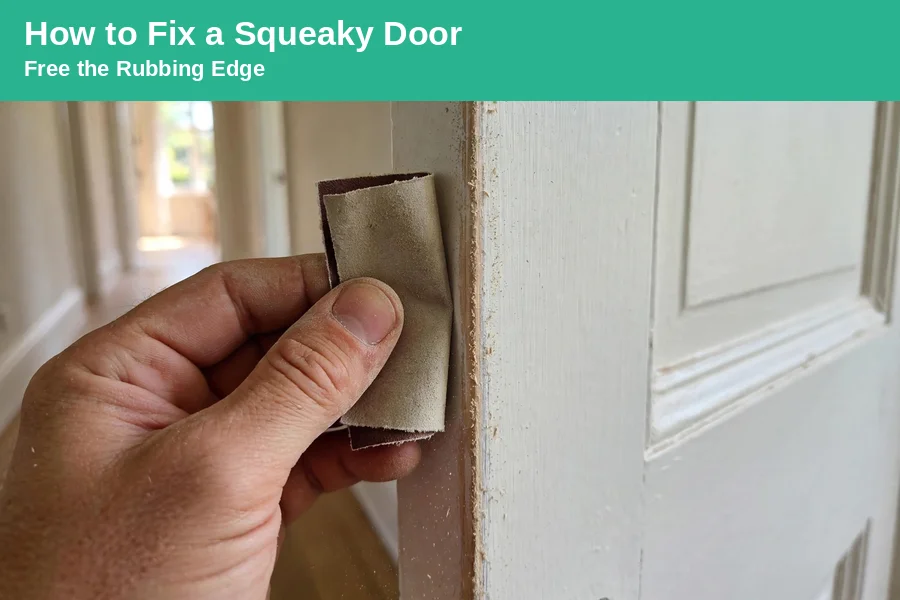
Rubbing can sound like a squeak, and oil will not fix it. Run a thin card along the door edge to find tight spots. Mark each tight spot with a pencil, so you can work on the right place.
Rub a white candle along a door stop that sticks a little. This can buy time while wood dries out in less humid air. Sand a painted edge lightly if the rub stays, and repaint the bare wood.
A sagging door often starts with one stripped screw hole. Remove the loose screw, and push a glued matchstick into the hole. Let it dry, trim it flush, and drive the screw back in for a firm hold.
Avoid Mistakes and Keep Doors Quiet
Do not flood the hinge with spray and hope for the best. Extra liquid runs onto paint and floors, and it traps dust inside. A small amount, worked in well, does far more good.
Do not take out all the pins at once. A door with no pins can fall, and it can hurt your toes. One hinge at a time keeps the job safe and simple.
- Do not use cooking oil, since it can go stale and sticky.
- Do not force a rusted pin, since it can bend or snap.
- Do not paint over a dirty hinge to hide the noise.
- Do not ignore a door that sticks more each week.
Add hinge checks to your normal home care routine. A quick wipe and a light spray each year stops grime build up. Doors near bathrooms may need checks more often, since steam adds damp. A guide to why home maintenance matters shows how small checks stop big repairs.
Questions About Squeaky Doors
Can WD-40 fix a squeaky door?
WD-40 can quiet a squeak for a short time, since it cleans and loosens grime. It is not a long term hinge lubricant, so the noise often returns soon. Silicone spray or lithium grease gives a longer lasting result.
How do I fix a squeaky door without removing the pins?
Spray lubricant into the hinge knuckles, and move the door back and forth. Lift each pin a little first if you can, so spray can reach inside. This quick method suits a mild squeak, not a rusted hinge.
Why does my door squeak only in wet weather?
Wood swells a little in damp air, so the door edge can rub the frame. Hinges can also hold damp, which adds friction to the pin. Dry the hinge, add lubricant, and check the door edge for rub marks.
Is it safe to remove a hinge pin on my own?
Yes, if you work on one hinge at a time. Get help to hold the door steady while you work. Do not remove all pins at once, since the door could fall.
When should I replace a hinge instead of fixing it?
Replace a hinge if the pin is bent or the leaf is cracked. Rust can eat metal so badly that no clean will help. Match the size and screw holes to the old hinge.
Do exterior doors need a different lubricant?
Exterior doors face rain and cold, so they need a grease that resists water. White lithium grease suits most exterior hinges well. Check exterior hinges each autumn, before wet weather sets in.
Your Next Quiet Evening Starts With One Hinge
Most squeaky doors need only a clean hinge and a light coat of grease. Start with the loudest hinge, test your work, and move on only if you must. That is how to fix a squeaky door without stress or fuss. You can finish most doors in one short session.
Small steps like these keep home jobs calm and quick. If you enjoy this kind of fix, try more beginner DIY home projects next. Each small win builds your skill, and your home gets quieter as you go. The same habit helps with cleaning a washing machine on a set schedule.
