
The easiest beginner projects are painting a room, swapping cabinet handles and fitting a shelf. Changing a showerhead, sealing draughts and laying stick-on tiles also suit first timers. Most take one to three hours, while painting takes a full day. Costs stay low, often £15 to £120 per job.
These DIY home improvement projects for beginners work best when you start small. Pick one room and one job, then finish it before you start the next. A finished job builds skill and trust in your own hands.
This guide gives you six easy home improvement projects with clear steps, times and costs. Every step uses plain words and honest UK prices. Read the safety part first, then pick your project.
The Short Version
- The six best first jobs are paint, handles, shelves, a showerhead, draught seals and tiles.
- Buy a small toolkit first, then learn each tool on a scrap piece.
- Never touch gas, mains electrics or structural walls, and test for asbestos in pre-2000 homes.
- Most jobs take one to three hours, and painting takes a full day.
- Check the costs table near the end before you buy paint or parts.
Your Starter Toolkit
A good kit makes DIY home improvement projects for beginners far less stressful. Buy the basics once and they will serve every job in this guide. Cheap tools break fast, so pick mid range own brand kit.
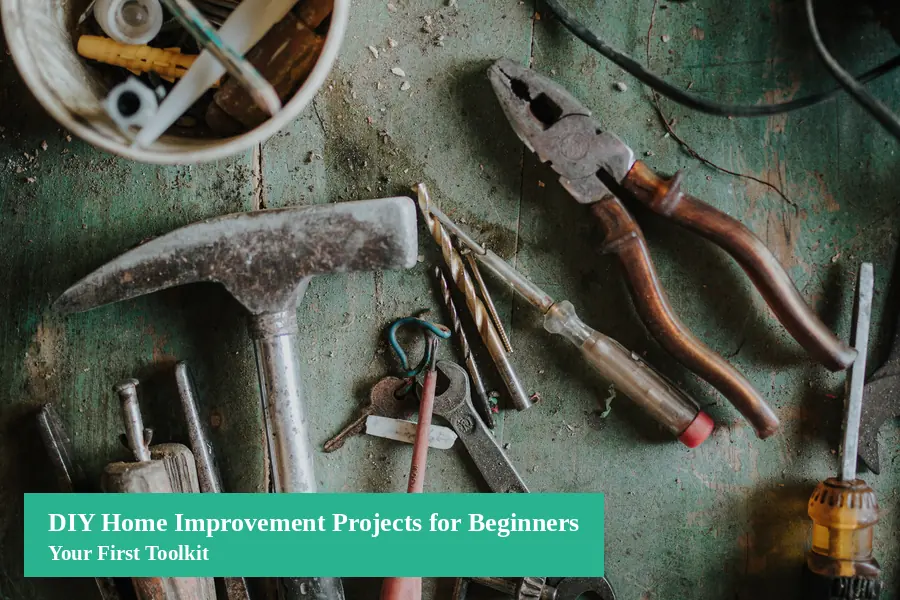
Hammer, pliers and screwdrivers on a bench. Each tool earns its place in the box.
Keep your DIY tools for beginners in one box, so nothing goes missing. A tape, a level and a pencil save more time than any power tool. Mark, measure twice and cut once, then check your work.
| Tool | What it does | Rough cost |
| Tape measure | Measures walls, shelves and gaps | £5 to £10 |
| Spirit level | Checks shelves and frames sit straight | £8 to £15 |
| Hammer | Drives and pulls nails | £8 to £15 |
| Screwdriver set | Turns screws in handles and hinges | £10 to £20 |
| Roller and tray | Spreads paint on flat walls | £10 to £20 |
| Caulk gun | Pushes sealant into baths and gaps | £5 to £10 |
| Stud finder | Finds timber behind plasterboard | £15 to £30 |
Beginner DIY Safety: Know Your Limits
Many DIY home improvement projects for beginners fail on safety, not skill. A calm check before you start keeps small jobs small. Gas, mains electrics and structural walls sit outside beginner work. Asbestos can hide in homes built before 2000, so test first.
Wear gloves, goggles and a dust mask for dusty or sharp work. Switch off power at the fuse box before you touch any fitting. Open a window when you paint or use sealant indoors.
- You smell gas, so leave the house and call the gas emergency line.
- You see bare wires or a burnt smell near a socket.
- You find grey fibrous board that may hold asbestos.
Project 1: Paint a Room
First time DIY painters often rush the prep, and the finish shows it. These DIY painting tips work on any plain plaster wall. Wash the walls, fill small holes and let filler dry hard.
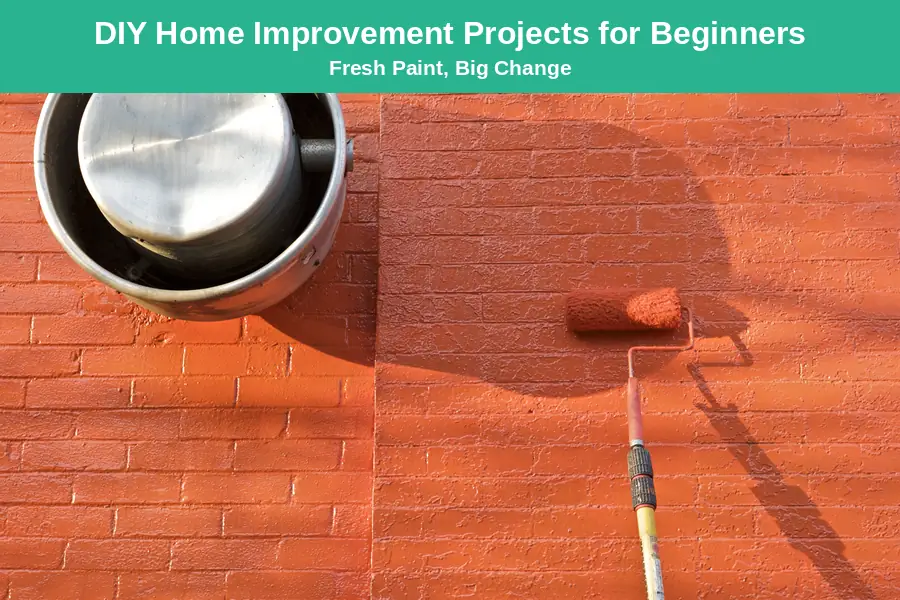
A roller loaded with red paint. A fresh coat can change a whole room in a day.
Cut in round the edges with a brush, then roll in a W shape. Two thin coats beat one thick coat that drips and sags. Let the first coat dry fully before you start the next.
- Clear the room and cover floors and furniture.
- Fill holes, sand smooth and wipe dust off.
- Tape skirting, sockets and window frames.
- Cut in edges, then roll walls top to bottom.
A small room takes half a day to a full day, so start in the morning. Our guide to paint colours helps you pick a shade that suits the light. Keep the room free of dust while the paint dries.
Project 2: Swap Cabinet Handles and Knobs
Easy DIY home projects like this one build skill fast. New handles change a kitchen or a chest of drawers in an hour. Unscrew the old handle, keep the screws safe and test the new fit.
Measure the gap between screw holes before you buy. Bring one old handle to the shop so the size matches. Tighten screws by hand, not with a drill on full power. A stripped hole needs a wood filler fix first.
Project 3: Fit Floating Shelves
Beginner DIY projects like shelves teach measuring, levelling and fixing in one job. Find the studs first, mark them and check the marks twice. A shelf fixed only to plasterboard will pull out in time.
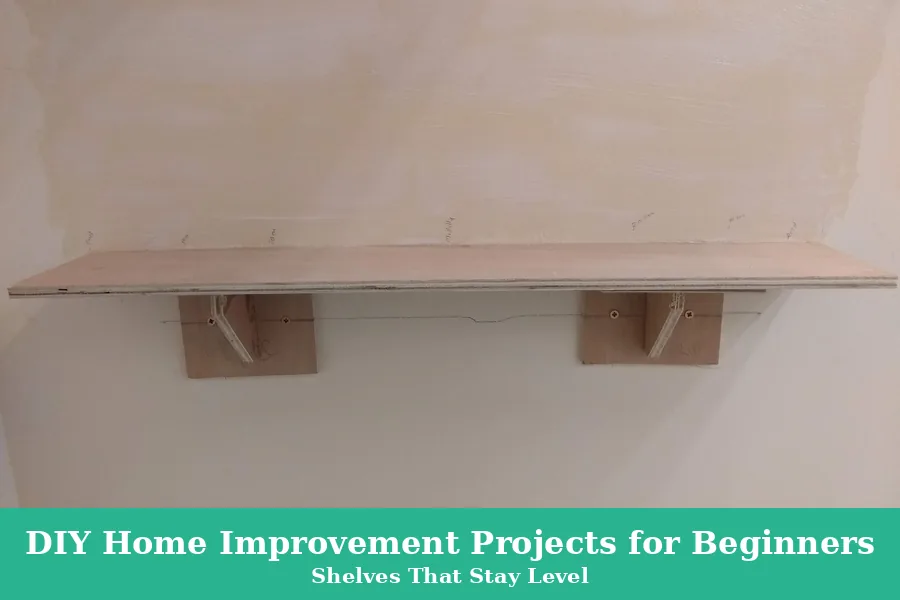
A plain wooden shelf on brackets. It holds books, plants and jars with ease.
Hold the shelf level, mark the holes and drill with care. Push in wall plugs that suit the wall type, then screw the bracket firm. Set the shelf on the bracket and test it with a light load.
One shelf takes one to two hours. A stud finder beeps over timber, so you drill in the right spot. No stud near the spot means use a plasterboard fixing made for the load.
Project 4: Replace a Showerhead or Fix a Dripping Tap
A weak shower or a drip at night drives most people mad. A new showerhead takes minutes and needs no plumber at all. Unscrew the old head, clean the thread and wrap it with PTFE tape.
A dripping tap often needs just a new washer inside. Turn off the water first, then open the tap to drain the pipe. Swap the worn washer, put the tap back and turn the water on.
Project 5: Seal Draughts and Re-Caulk a Bath
Cold air through gaps wastes heat and lifts your bills. Draught strips on doors and windows take an hour to fit. Our draught proofing guide shows the front door step by step.
A bath with black or cracked caulk looks tired and leaks water. Cut out the old sealant with a knife and clean the gap well. Lay a smooth bead of new caulk and shape it with a wet finger.
Project 6: Lay Peel-and-Stick Vinyl Tiles or Tile a Splashback
Stick-on vinyl tiles give a tired floor a fresh face fast. Clean the floor, start from the centre and press each tile firm. Cut edge tiles with a knife and a straight edge.
A tile splashback needs more care but still suits a first timer. Spread adhesive with a notched trowel, set each tile level and leave gaps even. Grout the next day, wipe the haze off and seal the edges.
Projects to Leave Alone for Now
A beginner home renovation should stop at paint and fittings, not walls and wires. Some jobs need a licence, a ticket or a trained eye. A wrong move on gas or mains power can hurt you badly.
Save these jobs for a pro and watch how they work. Ask what they check, what it costs and what can wait. You learn from a pro job and you stay safe too.
| Project | Why leave it | Who to call |
| Gas boiler or cooker | The law needs a Gas Safe engineer | Gas Safe registered engineer |
| Mains wiring or a new circuit | Part P rules apply in England and Wales | Registered electrician |
| Removing a load-bearing wall | It may hold the house up | Structural engineer |
| Asbestos removal | Loose fibres harm lungs badly | Licensed asbestos contractor |
| Roof work at height | Falls kill, and tiles hide weak spots | Qualified roofer |
What Each Project Costs in Time and Money
Use this table to plan DIY home improvement projects for beginners on a budget. Prices are rough estimates for DIY projects for beginners in the UK, not quotes. Our saving tips show how to keep each job cheap.
These cheap home improvements prove that a fresh room need not cost much. Start with the lowest cost job and build from there. A £20 win this week beats a £200 job left half done.
| Project | Time | Typical cost range |
| Paint a room | Half a day to a full day | £40 to £120 |
| Swap handles | 1 to 2 hours | £20 to £80 |
| Fit a shelf | 1 to 2 hours | £25 to £70 |
| Replace a showerhead | Under 1 hour | £15 to £60 |
| Fix a dripping tap | About 1 hour | £5 to £15 for parts |
| Seal draughts | 1 to 3 hours | £10 to £30 |
| Re-caulk a bath | 1 hour, plus a day to cure | £5 to £15 |
| Lay vinyl tiles | Half a day | £30 to £150 |
Frequently Asked Questions
What are the best DIY home improvement projects for beginners?
Painting a room, swapping handles and fitting a shelf top the list. Changing a showerhead, sealing draughts and laying stick-on tiles also rank high. Each job needs few tools and costs little. Pick one, finish it well and move on with fresh skill.
Do I need much money to start DIY?
No, a basic toolkit costs about £80 to £150 in total. Most first jobs need only paint or a few small parts. Buy tools once and use them across many jobs. Start with the cheapest project first.
Is DIY safe for a total beginner?
Yes, if you stick to paint, handles, shelves and simple swaps. Learn each tool on scrap wood first, then wear gloves and goggles. Switch off power before you touch a fitting. Never touch gas, mains wiring or structural walls.
How long does a first DIY project take?
Most first jobs take one to three hours. Painting a room takes half a day to a full day. Plan extra time for your first try. A slow first job still beats a rushed one that needs a redo.
What tools should a beginner buy first?
Start with a tape, level, hammer, screwdriver set, spanner, knife and caulk gun. Add a stud finder before you fix shelves to plasterboard. Buy mid range own brand kit and learn each tool well.
When should I call a professional instead?
Call a pro for gas work, mains wiring, load-bearing walls, asbestos and roof work at height. These jobs need licences, tickets or trained eyes, and a wrong move can hurt you. Watch the pro work and learn for the next job.
Your First Project Starts This Weekend
If you still ask how to start DIY, the answer is one small job. These DIY home improvement projects for beginners reward a calm start. Pick paint, handles or a shelf, buy the kit and set aside a morning.
Look for more home improvement ideas for beginners in the Home Improvement cluster. Still unsure if DIY suits you? Read our take on whether DIY home improvement is a good idea. Then keep your home in shape with our home maintenance guide.
