
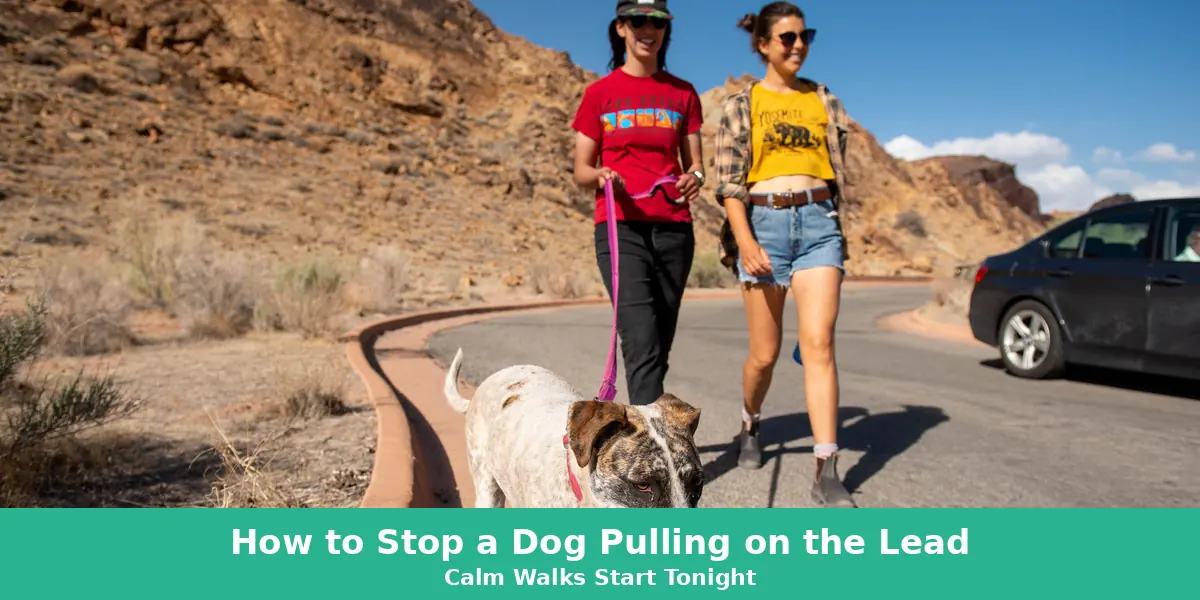
How to stop a dog pulling on the lead? Halt when the lead goes tight. Stand still and quiet until the lead slackens, then walk on and reward your dog. Repeat this on every walk, and most dogs start to improve within two to four weeks.
Pulling turns a simple walk into a tug of war. Your arm aches, your dog coughs, and neither of you enjoys the walk. This guide gives you a calm plan for real streets. It also covers the kit that helps and the mistakes to skip.
Why Your Dog Pulls on the Lead
Your dog pulls because pulling works. Each step forward on a tight lead teaches your dog that pulling pays. Your dog also walks faster than you, and the world smells too good to wait for. The goal is loose lead walking, where the lead hangs in a soft U.
PDSA found pulling was the behaviour owners most wanted to change. In its 2020 PAW report, 24% of owners named pulling as their top worry. Blue Cross adds a simple fact: a dog walks about twice as fast as a person. Search is full of guides on how to stop a dog pulling on the lead.
Some dogs pull from worry, not excitement. A nervous dog may pull away from traffic, bikes, or loud groups. New dog at home? Read our guide to preparing for your first pet first.
- Excitement: the walk is the best part of the day.
- Smells: every lamp post tells a story.
- Habit: pulling has paid off for months or years.
- Worry: the lead tightens and the dog wants space.
- Breed drive: some breeds were bred to pull or chase.
At a Glance
| What to know | The short answer |
|---|---|
| Why dogs pull | Pulling works, so dogs keep doing it. |
| The fix | Stop when the lead tightens, reward a slack lead. |
| The kit | Front clip harness, fixed lead, treat pouch. |
| How long | Daily practice, real change in weeks. |
| What to skip | Retractable leads, choke chains, shouting. |
The Kit That Helps, and What to Skip
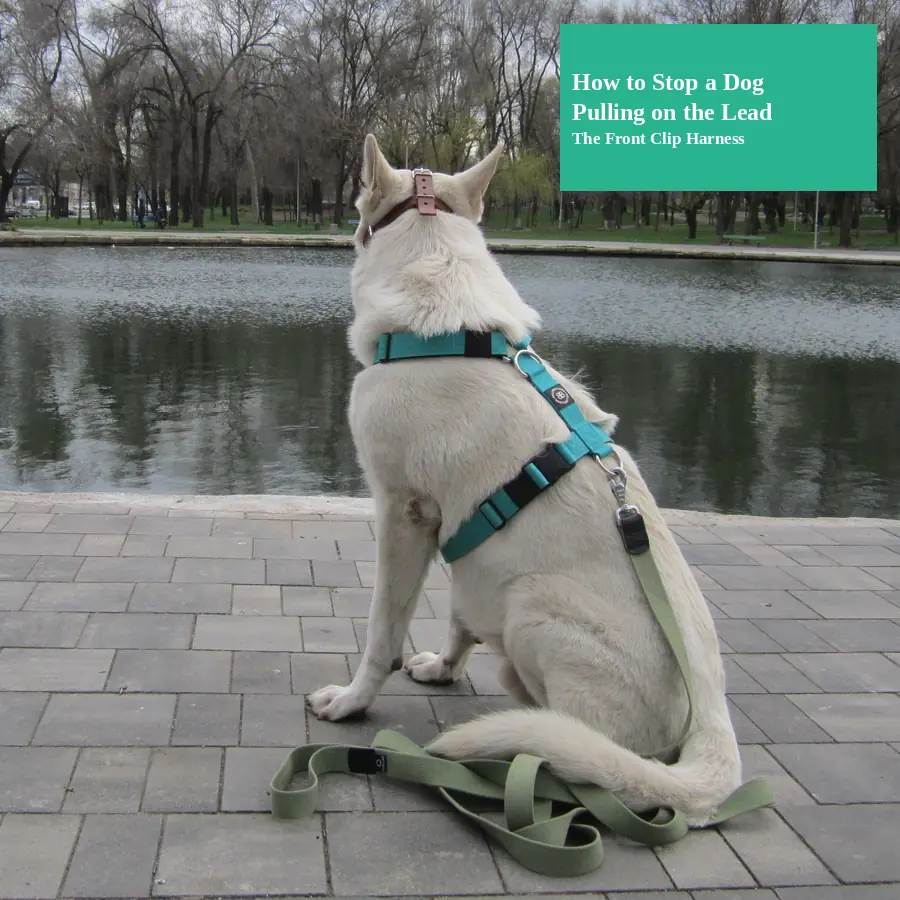
A front clip harness, a fixed lead, and a treat pouch are all you need. The harness turns your dog back toward you when it pulls. The rest is training, not shopping.
Pick a harness with a clip at the chest, not the back. A back clip gives your dog something to lean into, like a sled dog. Check the fit with two fingers under each strap, and let your dog sniff it first.
Use a flat lead about 1.5 to 2 metres long. Dogs Trust advises a fixed length lead for training. Keep the collar and tag on too, since the law asks for your name and address.
- Retractable leads: they reward pulling with more freedom.
- Choke chains, prong collars, and shock collars: vets advise against them.
- Bungee leads: the stretch confuses the lesson.
- A collar alone for a strong puller: pressure on the neck can cause coughing.
How to Stop a Dog Pulling on the Lead With the Stop and Start Method
Stop the moment the lead goes tight, wait for slack, then walk on. Reward your dog for every step beside you. Repeat this on every walk and the lesson sticks.
Start in your garden or a quiet room, not on a busy street. Reward your dog for standing by your side, then for one step, then two. Keep sessions short, about ten minutes, and end while your dog is still keen.
- Play in the garden first to take the edge off.
- Ask for a sit before you clip the lead on.
- Step out only when your dog is calm.
- The second the lead tightens, stop and stand still.
- Wait in silence until the lead goes slack.
- Reward the slack lead, then walk on.
- If your dog does not turn back, take two steps the other way.
- Build up slowly: quiet street, then the park, then busier times.
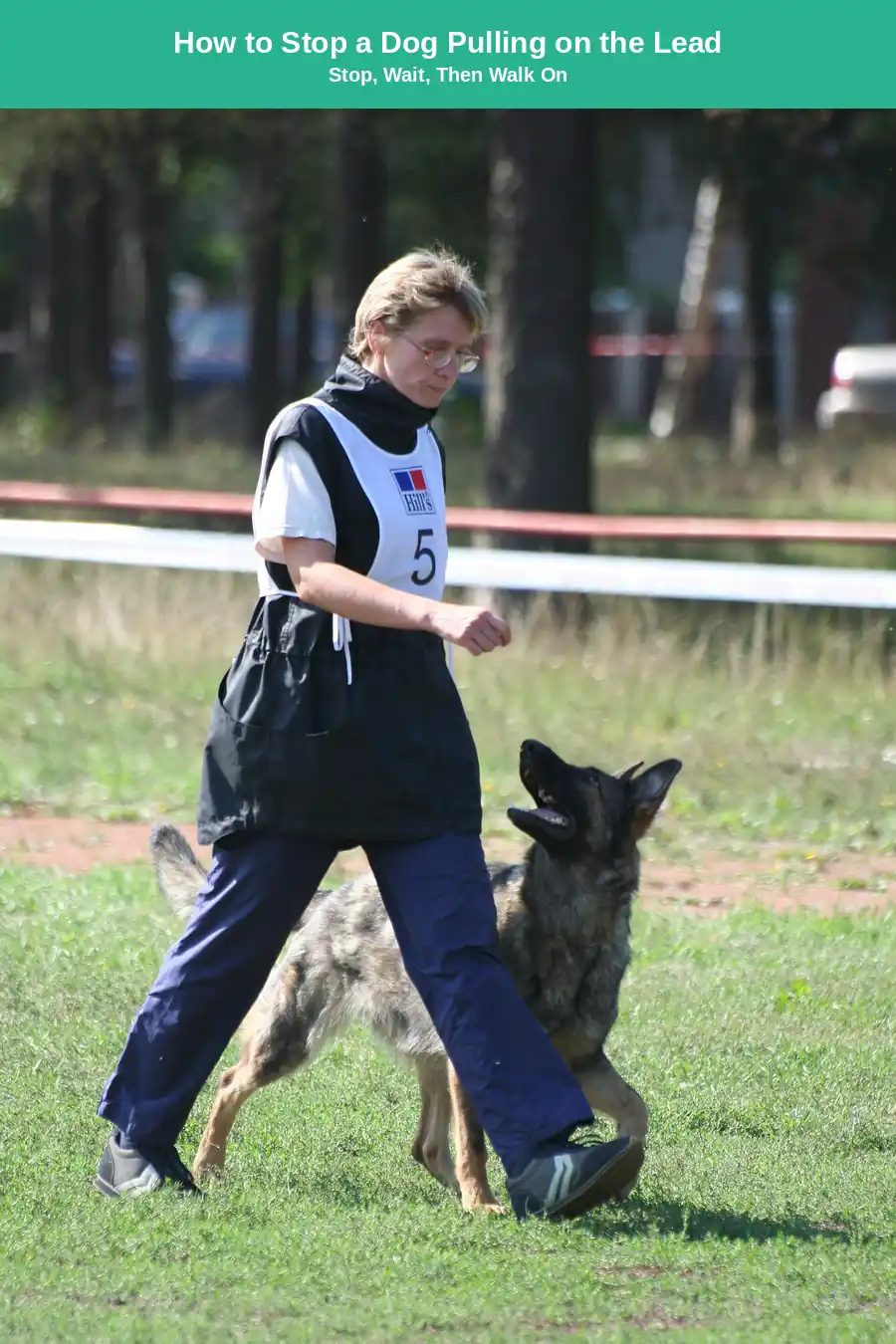
Pay well at first, with small tasty treats like chicken or cheese. Cut the main meal a little on training days, so treats do not pile on weight. Fade the treats bit by bit, and swap them for praise over time. Dogs Trust shows the same steps in its loose lead guide.
The Turn Around Trick for Persistent Pullers
If stopping alone does not work, turn and walk the other way. This helps while you learn how to stop a dog pulling on the lead. Use it calmly, without jerking the lead.
Turn the moment your dog surges ahead, before the lead goes tight. Take two or three steps back the way you came. Reward your dog the second it catches up beside you.
Practise the turn where nothing much happens first. If you are choosing where to live, a quiet neighbourhood with parks makes training far easier. Busy parks can wait until the turn feels easy at home.
A Simple Seven Day Starter Plan
This plan shows how to stop a dog pulling on the lead in one week. Days one to three stay close to home. Days four to six add real streets, and day seven tests a busier route. Keep every session to ten minutes.
Write down one line after each session, so you can see the change. Note where your dog pulled, what worked, and how long the lead stayed slack. Small wins stack up fast when you can see them. Two short sessions a day fit neatly into a healthier daily routine.
| Day | Where | Focus |
|---|---|---|
| 1 | Garden or living room | Reward standing by your side |
| 2 | Garden | Two or three steps on a loose lead |
| 3 | Garden gate and path | Calm lead on and first steps out |
| 4 | Quiet street | Stop and start on a real pavement |
| 5 | Quiet street | Turn around trick when your dog surges |
| 6 | Local park, off peak | Loose lead with mild distractions |
| 7 | Busier route | Short test, then back to a quiet street |
Mistakes That Undo the Training
Most setbacks come from mixed messages, not a stubborn dog. One person lets the dog pull while another stops. The dog learns that pulling still works, so pick one method and hold it.
Long sessions tire a young dog and bore an older one. Ten minutes of sharp practice beats an hour of dragging. Stop early, play a little, and try again later in the day.
- Training only on walks: practise at home first, where focus is easy.
- Moving forward on a tight lead: even one step pays the pulling.
- Shouting or jerking the lead: fear slows learning and breaks trust.
- Switching methods every few days: dogs need two to three weeks on one plan.
- Skipping days: gaps let the old habit creep back.
Puppies, Adults and Older Dogs
Age changes the pace, not the method. Puppies learn fast in five minute bursts. Adults need patience to break old habits, and older dogs need short gentle sessions.
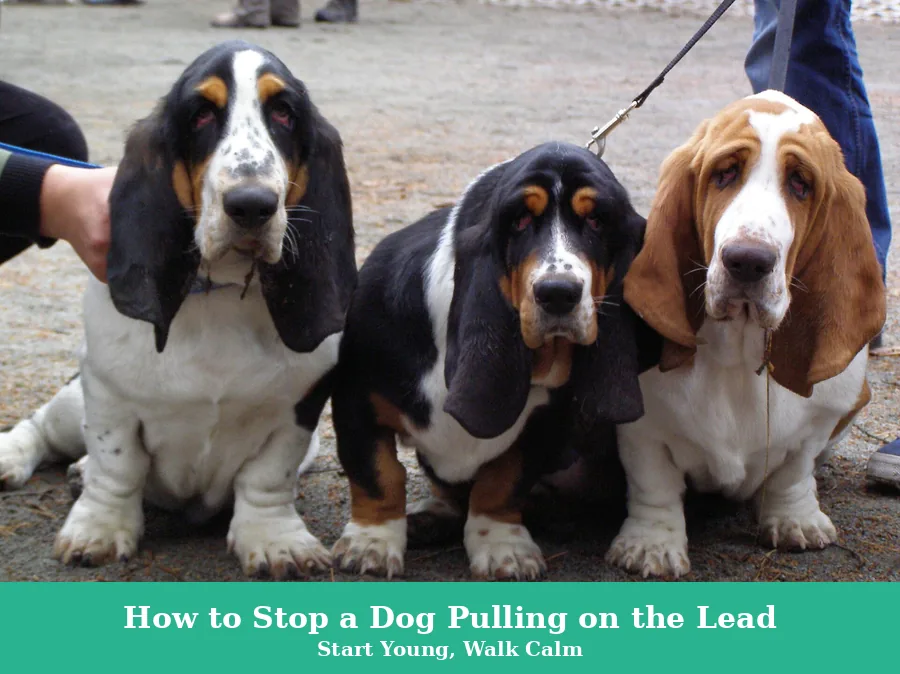
Start lead training at eight to ten weeks, once your vet clears walks. Keep the first sessions in the garden and use a light harness. A puppy that learns slack lead early keeps the habit for life.
Older dogs can learn too, so never write them off. Go gently if joints are stiff, and watch for pain that changes how they walk. A sudden change in walking deserves a vet visit first.
When to Ask a Trainer or Your Vet
Ask for help if pulling comes with lunging, fear, or no change after a month. A certified trainer can watch you walk and spot the one thing to fix. Pain can also change how a dog walks, so rule that out first.
Look for trainers listed by the APDT UK or the IMDT. The Animal Behaviour and Training Council lists clinical behaviourists too. These groups use reward based methods and set clear standards. Ask any trainer how they work before you book.
- Choke chains, prong collars, or shock collars on the kit list.
- Promises of a fix in one session.
- No questions about your dog’s health or history.
- Shouting or force as a training tool.
See your vet first if your dog coughs or gags when it pulls. Sudden pulling, limping, or a refusal to walk can point to pain. Training cannot fix a sore neck or a stiff joint.
Questions About Dogs That Pull on the Lead
How long does it take to stop a dog pulling on the lead?
Most dogs show real change within two to four weeks of short daily practice. Full mastery takes longer, often six to twelve weeks. Adult dogs with old habits need more time. Keep sessions short, stay consistent, and track small wins each week.
What is the best harness to stop a dog pulling?
A front clip harness works best for most dogs. Pulling turns the dog back toward you. Pick one with a chest clip and padded straps, and check the fit with two fingers. The harness helps, but it only works beside steady training.
Should I use a harness or a collar for a dog that pulls?
Use a harness for training, since it spreads pressure across the chest and guards the neck. Keep the collar and tag on as well. UK law asks for your name and address on it. A collar alone suits a dog that already walks well.
Do retractable leads make pulling worse?
Yes, they teach the wrong lesson, since pulling makes the lead longer and the world closer. Your dog learns that a tight lead buys freedom. Swap it for a fixed lead of about 1.5 to 2 metres while you train.
Can an old dog learn to walk on a loose lead?
Yes, older dogs can learn, though it takes more time and patience. Keep sessions short, use a padded harness, and watch for stiff joints or sore paws. If your dog suddenly pulls more or seems in pain, book a vet visit first.
Your Next Walk Can Feel Different
Start in your garden, with ten minutes and a pocket of treats. Stop when the lead tightens, reward the slack, and turn when you must. Small steady steps beat grand plans every time. You now know how to stop a dog pulling on the lead, so start tonight.
Once walks feel calm at home, the same rules travel with you on trips and holidays. Our guide to travelling with pets shows how to keep good lead manners on the road. Your dog is ready when you are.
