
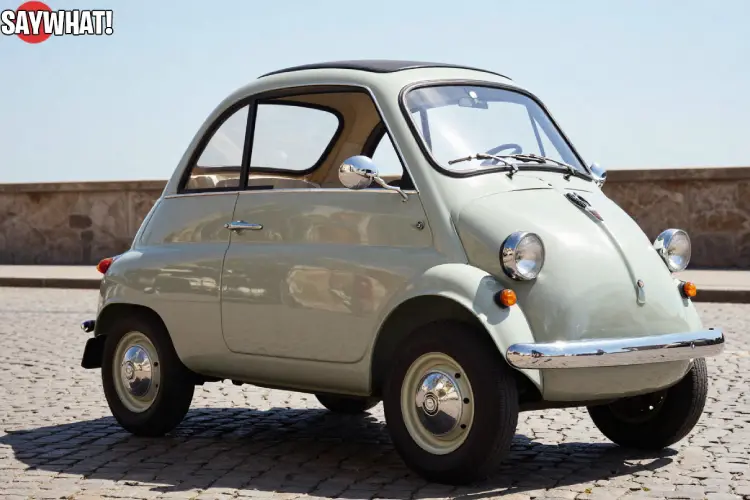
The Auto Isetta is a 1950s microcar known for its single front-opening door, compact bubble design, and exceptional fuel efficiency. Originally made by Iso SpA and later BMW, this iconic vintage car remains a prized collectible among enthusiasts worldwide.
Introduction
The Auto Isetta stands as one of the most recognizable microcars ever built. With its egg-shaped body and front-opening door, this tiny vehicle solved post-war Europe’s transportation crisis while creating a lasting automotive legacy.
Born in Italy and perfected in Germany, the Isetta became more than just cheap transportation. It evolved into a cultural icon that still captures hearts at car shows and on city streets today.
This guide covers everything you need to know about the Auto Isetta—from its innovative design to what it takes to own one in the modern era.
History of the Auto Isetta
Origins in Post-War Europe
Iso SpA, an Italian refrigerator manufacturer, designed the original Isetta in 1953. Renzo Rivolta, the company’s founder, saw an opportunity to create affordable transportation during Europe’s economic recovery.
The first Iso Isetta featured a 236cc two-stroke engine and could seat two adults. Its name came from the Italian diminutive of “Iso”—making it the “little Iso.”
The BMW Partnership
BMW acquired the Isetta license in 1955, transforming the microcar into the BMW Isetta 300. The German manufacturer made critical improvements: a more powerful 298cc single-cylinder engine, modified suspension, and better build quality.
BMW’s version sold over 160,000 units between 1955 and 1962. The car saved BMW from potential bankruptcy, proving that small could indeed be profitable.
Global Reach
Several manufacturers produced Isettas under license:
- Romi-Isetta in Brazil
- VELAM Isetta in France
- Isetta of Great Britain in the UK
Each market adapted the design to local regulations and preferences, but all retained the signature front door.
Auto Isetta Design and Features
The Revolutionary Front Door
The Isetta’s most distinctive feature remains its single front-opening door. The entire front of the car swings open, with the steering wheel and column moving with it. This design made entry simple despite the car’s narrow 4.5-foot width.
A canvas sunroof provided emergency exit capability—essential since the door was the only conventional exit point.
Compact Dimensions
The BMW Isetta measured just 7.5 feet long and 4.5 feet wide. Total weight came in under 800 pounds, making it genuinely pocket-sized by automotive standards.
Despite its tiny footprint, the Isetta offered surprising interior space for two adults. Storage behind the seat accommodated groceries or small luggage.
Bubble Car Aesthetics
The rounded, bulbous shape earned the Isetta its “bubble car” nickname. Large windows provided excellent visibility, while the streamlined form reduced wind resistance.
Chrome bumpers, simple headlights, and minimal ornamentation kept the design clean and functional. Some models featured two-tone paint schemes that enhanced the car’s playful character.
Interior Layout
The dashboard held basic instruments: speedometer, fuel gauge, and indicator lights. The single bench seat accommodated two people in reasonable comfort.
Controls were straightforward—a four-speed transmission, hand brake, and minimal switches. The steering column’s movement with the door initially surprised drivers but quickly became second nature.
Performance and Engine Specifications
Engine Options
The BMW Isetta 300 used a 298cc single-cylinder four-stroke engine producing 13 horsepower. Earlier Iso models had smaller 236cc two-stroke engines with 9.5 horsepower.
The engine sat in the rear, driving a chain to the single rear axle. This layout provided acceptable weight distribution and simple mechanical design.
Speed and Acceleration
Top speed reached approximately 53 mph in the BMW version—adequate for city streets and short highway runs. Zero to 30 mph took about 10 seconds.
The four-speed manual transmission required careful shifting. First gear was notably short, while fourth provided reasonable cruising at 45-50 mph.
Urban Maneuverability
The Isetta excelled in tight spaces. Its 5.7-meter turning circle made U-turns effortless. Parking became simple—you could fit into spots other cars couldn’t attempt.
Lightweight construction meant responsive handling, though the narrow track required attention in crosswinds. The short wheelbase made the ride bouncy but entertaining.
Fuel Economy
Fuel consumption averaged 50-70 miles per gallon, depending on driving style. The 3.2-gallon fuel tank provided approximately 200 miles of range.
This efficiency made the Isetta practical when fuel prices rose during the Suez Crisis of 1956-1957.
Popularity and Cultural Impact
Transportation Solution
In 1950s Europe, the Isetta answered real needs. Families couldn’t afford full-sized cars, but motorcycles left riders exposed to weather. The Isetta offered enclosed transportation at motorcycle prices.
German cities particularly embraced the model. Narrow streets and parking shortages made the Isetta’s compact size invaluable.
Media Appearances
The Isetta appeared in numerous films and television shows:
- Featured prominently in various European comedies
- Used as a prop to emphasize quirky characters
- Became shorthand for post-war European resourcefulness
Its distinctive appearance made it instantly recognizable on screen.
Collector Appeal
Modern enthusiasts prize original Isettas for their uniqueness. The cars regularly appear at vintage rallies, where their bubble shape draws crowds.
Restored examples command respect at concours events. The Isetta’s historical significance—saving BMW from bankruptcy—adds to its collectibility.
Microcar Movement
The Isetta helped establish the microcar as a legitimate vehicle class. It proved that tiny cars could be safe, practical, and even desirable.
This legacy influenced later city cars and smart urban vehicles.
Modern Collectors’ Market and Value
Current Market Values
Fully restored BMW Isettas typically sell for $30,000-$60,000. Rare variants or exceptionally original examples can exceed $75,000.
Project cars needing restoration start around $8,000-$15,000. Partially restored examples fall in the $15,000-$30,000 range.
Buying Considerations
When purchasing an Isetta, inspect these critical areas:
- Frame condition (rust is the primary enemy)
- Engine originality and running condition
- Door alignment and seal integrity
- Chrome condition on bumpers and trim
- Completeness of unique Isetta-specific parts
Documentation adds value. Original manuals, service records, and provenance increase prices by 10-20%.
Restoration Challenges
Finding original parts presents the biggest restoration hurdle. Many components were Isetta-specific and haven’t been manufactured in decades.
Specialist suppliers now reproduce some parts:
- Rubber seals and gaskets
- Chrome trim pieces
- Upholstery materials
- Some mechanical components
Budget $15,000-$30,000 for a quality restoration beyond the initial purchase price.
Enthusiast Communities
Several active Isetta clubs exist worldwide:
- Isetta Club Deutschland
- Isetta Owners Club of Great Britain
- Various regional groups in North America
These organizations offer technical advice, parts sources, and social events. Annual gatherings let owners share experiences and show their cars.
Auto Isetta vs. Other Microcars
Messerschmitt KR200
The Messerschmitt offered:
- Tandem seating (not side-by-side)
- Aircraft-style canopy door
- Slightly better performance
- More aggressive styling
The Isetta provided easier entry and more conventional seating. The BMW version proved more reliable long-term.
Heinkel Kabine
Heinkel’s microcar featured:
- Similar bubble design
- Rear engine layout
- Comparable size and weight
The Isetta’s BMW build quality generally surpassed Heinkel’s execution. Sales numbers favored the Isetta significantly.
Which to Choose?
For collectors, the BMW Isetta offers the best combination of availability, parts support, and value retention. Its historical significance to BMW adds appeal.
The Messerschmitt appeals to those wanting something more unusual. Heinkel models attract buyers seeking rarity.
Budget typically decides—Isettas appear more frequently at auctions and from dealers.
Tips for Owning and Driving an Auto Isetta Today
Daily Driving Considerations
Modern traffic presents challenges for Isetta owners:
- Acceleration struggles to match contemporary vehicles
- Visibility issues when surrounded by SUVs
- Lack of safety features (no seatbelts in original specification)
- Weather sealing inferior to modern standards
Reserve daily driving for low-speed urban areas or special occasions.
Parking Advantages
The Isetta’s tiny footprint makes parking simple:
- Fits perpendicular to curbs (drive in nose-first)
- Occupies minimal garage space
- Can maneuver where modern cars cannot
City driving showcases the Isetta’s strengths.
Maintenance Requirements
Regular maintenance keeps these simple engines running:
- Oil changes every 1,000 miles
- Spark plug inspection every 500 miles
- Chain drive tension checks monthly
- Carburetor adjustment as needed
The mechanical simplicity means repairs rarely require specialized tools. Basic mechanical knowledge suffices for routine work.
Safety Updates
Consider these modern safety additions:
- Three-point seatbelts (can be retrofitted)
- Updated brake pads with modern compounds
- Additional rear lighting for visibility
- Rearview mirrors (many originals had only one)
Maintain awareness that the Isetta offers minimal crash protection by contemporary standards.
Show Participation
Isettas are welcome at virtually every car show:
- Draw crowds due to unique design
- Often win “Best in Class” for microcars
- Popular with children (great conversation starter)
- Photography magnet
Prepare to answer the same questions repeatedly—people genuinely love learning about these cars.
Storage Considerations
Protect your Isetta during storage:
- Climate-controlled space prevents rust
- Battery tender maintains electrical system
- Fuel stabilizer protects carburetor
- Cover prevents dust accumulation
The small size makes indoor storage feasible for most collectors.
Conclusion
The Auto Isetta represents automotive ingenuity at its finest. This tiny bubble car solved real problems while creating lasting automotive history.
From saving BMW to charming modern collectors, the Isetta’s influence extends far beyond its modest size. Its practical design, fuel efficiency, and undeniable character ensure continued popularity among vintage car enthusiasts.
Whether you’re considering ownership or simply appreciate automotive history, the Isetta deserves recognition as a true microcar icon. Its front-opening door still turns heads seven decades after the first model rolled off Iso’s production line.
