

An unpaid invoice can spoil your week. You did the work, sent the bill, and the money has not arrived. This guide shows how to handle late payments from clients in a calm and firm way. You will get a reminder plan, phone words and UK rules.
Most late payments are not a fight. They come from a lost invoice or a busy accounts team. A clear process fixes most cases fast. It also protects the client relationship for future work.
What to do first when a payment is late
Stay calm, check the facts, and send one polite reminder soon after the due date. Ask for a payment date, not just for the money. Keep every message short, polite and in writing. A dated promise beats a vague assurance every time.
Start by checking your own records. Confirm the invoice number, the amount, and the due date. Check that the client got the invoice at all. A wrong email address causes more delays than most owners expect.
Then check whether part of the bill was paid. A part payment changes what you ask for next. It also shows the client is trying, which matters for your tone.
The Short Version
- Check the invoice and the due date before you chase anyone.
- Send a polite reminder, then call if the silence lasts.
- Offer a short written payment plan for clients in difficulty.
- Use your UK rights on business debts, and get advice before court action.
- Set deposits and clear terms so the next invoice is paid on time.
Check your invoice before you chase
A chase only works when the invoice is right. One error gives the client a fair reason to wait. Spend ten minutes on this check before you send anything.
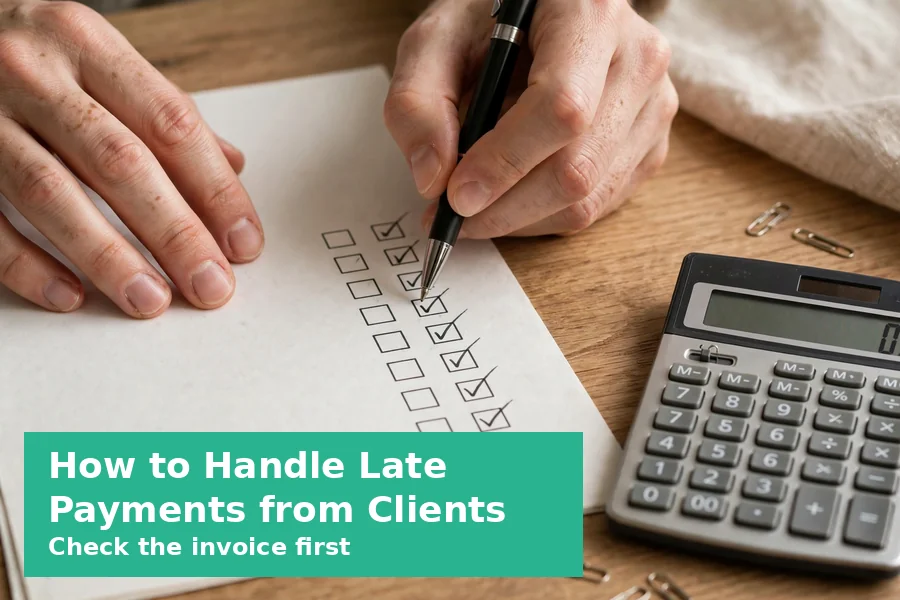
Look for the invoice number, the date, and a clear description of the work. Check the total, the VAT line if you charge VAT, and your bank details. Make sure the payment terms and the due date are in plain words.
- Invoice number, date and a clear description of the work done.
- Correct total, VAT line where it applies, and bank details.
- Payment terms and due date written in plain words.
- The right contact name and the right email address.
- Proof of delivery, such as a signed sheet or a sent email.
How to handle late payments from clients step by step
A fixed sequence beats random chasing. The client knows what comes next, and you stay in control. Use the same steps for each overdue invoice.
- One to three days late: send a short friendly email with the invoice attached again.
- Seven days late: send a firmer email and ask for a payment date in reply.
- Fourteen days late: call the client and agree a date, then confirm it by email.
- Twenty one days late: send a formal final reminder with a clear last date.
- Thirty days late or more: pause new work and consider a letter before action.
Keep a short log for each invoice. Note the date, the message sent, and what the client said back. A clean log helps if the case ever goes further.
What to say when you call
Calls solve cases that emails cannot. A short call finds the real block, which is often a small admin slip. Keep your voice calm and your goal clear.

Open with the facts, not with blame. State the invoice number, the amount, and the due date. Then ask one open question about what is holding payment up.
- Ask if the invoice reached the right person in accounts.
- Ask if any detail is missing or needs to be fixed.
- Ask for a firm date, and repeat it back to confirm.
- Offer a payment link or bank details again on the call.
- End by saying you will confirm the date by email.
Offer a payment plan that still protects you
Some clients want to pay but cannot pay in full at once. A short plan can recover the full amount and keep the client. A long vague plan often fails, so keep it tight.
Put the plan in writing before you agree it. State the total owed, each instalment, and each date. State what happens if a payment is missed.
| Part | What to agree |
|---|---|
| First payment | A fair sum paid at once, ideally within seven days. |
| Instalments | Two to four equal payments over a short period. |
| Missed payment | The full balance falls due at once. |
Ask for the first payment straight away if you can. A client who pays something at once is far more likely to finish the plan. Set the first date within seven days of the agreement.
Your UK rights on late commercial payments
UK law gives suppliers rights when another business pays late. The Late Payment of Commercial Debts (Interest) Act 1998 covers business to business debts. It does not cover debts owed by private consumers.
For a business debt, statutory interest is 8 percent above the base rate. The base rate was 3.75 percent through 2026. Debts that went late in 2026 carry 11.75 percent a year. Interest is simple, worked per day, and it is not added on top of interest.
You can also claim a fixed sum for each late payment, on top of the interest. The sum depends on the size of the debt, and you claim it once per payment. The table below shows the three bands.
| Size of debt | Fixed sum you can claim |
|---|---|
| Up to £999.99 | £40 |
| £1,000 to £9,999.99 | £70 |
| £10,000 or more | £100 |
If your contract sets its own interest rate, that rate applies instead. You cannot claim statutory interest on top of it. This section is general information only, not legal advice.
Speak to a solicitor or an accountant for a large or disputed debt. For more detail, see the Xero guide to reducing payment delays. If you sell to private customers, different rules apply. Our guide to UK consumer rights on refunds, returns and repairs explains them.
When to pause work or take the next step
Pausing work is a strong step, so use it with care. It works best when the client was warned in your final reminder. It also stops the debt from growing while you wait.
Tell the client in writing that work pauses until payment lands. Give a restart date linked to payment, not to a vague promise. Keep the tone polite, even when you are firm.
- Pause new work after a clear written warning.
- Send a letter before action with a final payment date.
- Try mediation or the Small Business Commissioner for a larger firm.
- Consider a court claim for money if all else fails.
- Get advice before you pay for legal or recovery help.
Stop late payments before they start
Prevention beats chasing every time. Small changes to your terms can cut late payments sharply. Most of them cost nothing to set up.
Agree payment terms in writing before work starts. A short email that states the price, the deposit, and the due date is enough. Send the invoice on the day you finish the work.
- Ask for a deposit, often 25 to 50 percent, before you start.
- Invoice on the day of delivery, not at month end.
- Offer bank transfer and card payment, so paying is easy.
- Send automatic reminders a few days before the due date.
- Run a quick credit check on larger new business clients.
Good terms also help your wider small business finances, since cash flow stays steady when invoices are paid on time. Even strong firms can struggle when one large client pays late, which is why small firms need clear payment terms from the start. Clear terms also cut awkward talks about money later.
FAQs
How soon should I chase a late invoice?
Send a polite reminder one to three days after the due date. Most late payments are simple oversights, and an early note catches them fast. Waiting weeks only makes the debt feel less urgent to the client.
Can I charge interest on a late business invoice?
Yes, for business to business debts, UK law allows statutory interest. The rate is 8 percent plus the Bank of England base rate. You can also claim a fixed sum of £40, £70 or £100 per late payment. Check your contract first, since its own rate may apply instead.
Should I keep working for a client who has not paid?
Not as a rule, since unpaid work only grows the debt. Warn the client in writing, then pause new work until payment lands. A clear pause often brings payment faster than another reminder email.
What if the client says they cannot pay in full?
Offer a short written plan with two to four instalments and a first payment at once. State each date and what happens if a payment is missed. A plan in writing protects you far better than a verbal promise.
Does the late payment law cover private customers?
No, the statutory scheme covers business to business debts only. For a private customer, interest needs a contract term. That term must also be fair. Keep your terms clear for both kinds of client.
When should I get professional help with a debt?
Get advice when the sum is large, the client disputes the work, or letters have failed. A solicitor, an accountant or a mediator can weigh the next step. Court action is a last resort, not a first move.
Turn slow payers into prompt payers from your next invoice
Chasing payment is a skill, not a character flaw. A calm sequence, clear terms and fair rights will recover most debts. The clients worth keeping will respect a firm who is clear about money. Learn how to handle late payments from clients once, then reuse the same steps each time.
Start today with one change. Add a deposit to your next quote, or set up automatic reminders for your next invoice. Small firms that fix payment terms early spend far less time chasing money later.
