
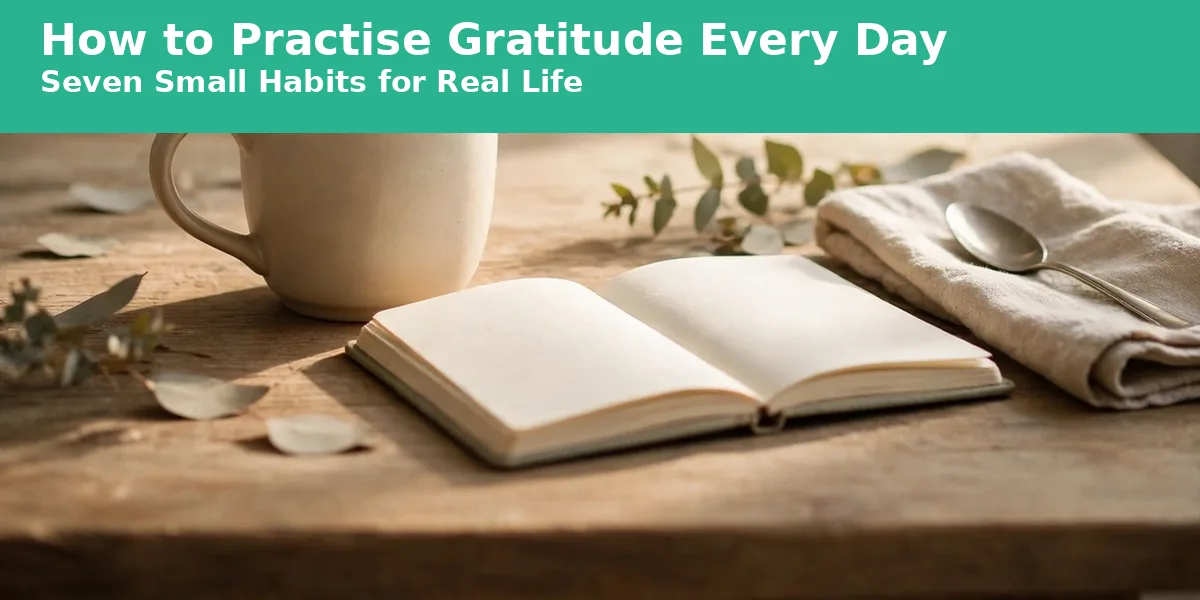
Learning how to practise gratitude every day starts with one small pause. You notice one good thing, name it in plain words, and let it land. You do not need a perfect morning, a new notebook, or a long list. This guide shows seven small habits that fit busy days, tired evenings, and real family life.
What gratitude really means in daily life
Gratitude means noticing what is good, true, and present in your life right now. It can be a warm drink or a kind text. It can be a safe home or help from a friend. It does not mean you ignore pain, loss, or stress in your life.
Small moments count just as much as big events in this practice. A bus that came on time can count on a rushed morning. A neighbour who held a door can count on a hard day. When you name such moments, your mind starts to spot them with less effort.
Gratitude also grows when you link it to action in some small way. You might send a short text, say thanks face to face, or write one line. The NHS five steps to mental wellbeing include taking notice of the world around you. Such simple acts keep gratitude honest, warm, and grounded in real life. You can read the NHS five steps to mental wellbeing guide for the full list.
How to practise gratitude every day without a journal
You can practise gratitude with no journal, no app, and no set routine at all. Pick one fixed moment in your day. Brushing your teeth or waiting for the kettle both work well. At that moment, name one good thing from the last few hours.
Gratitude prompts help when your mind goes blank at that fixed moment. Ask what helped you today, who made your day easier, or what felt calm. Ask what tasted good, what made you smile, or what went right. One clear answer beats a long list of vague items every time.
Pair the habit with a task you already do without thinking each day. A daily gratitude practice sticks best when it rides on an old habit. If you link it to morning coffee, a walk, or bedtime, you need less willpower. Read how to build a healthier daily routine for more simple habit ideas.
What matters most
- Gratitude is noticing one good thing and naming it in plain words.
- One fixed moment each day beats a long list you soon drop.
- Specific details make thanks feel real, not forced or hollow.
- Hard days still hold small good things, if you look gently.
- Thanks said out loud helps other people as well as you.
Three good things at night
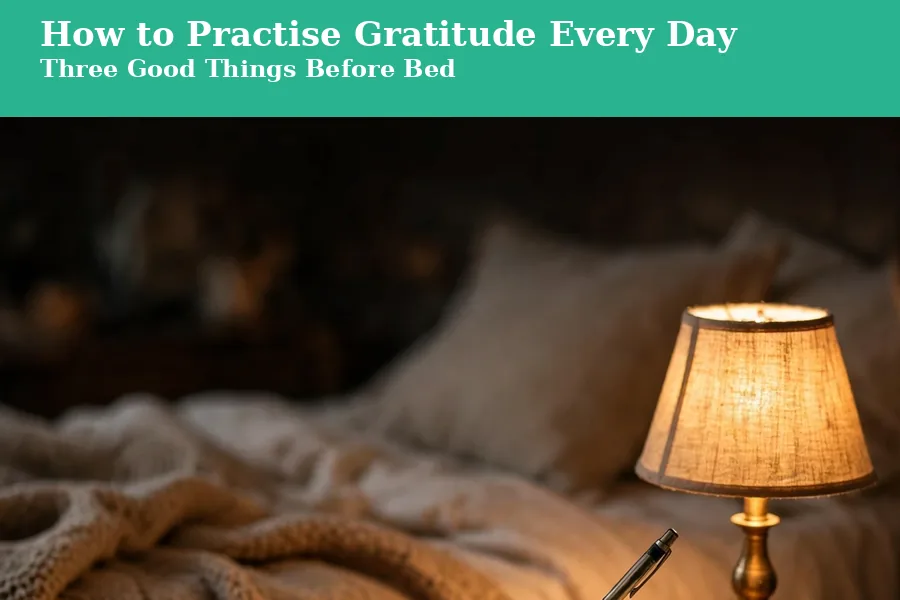
Three good things at night helps a lot. It is one easy way to learn how to practise gratitude every day. Before bed, think of three things that went well during your day. Add one short reason for each item, so the list stays specific.
Reasons turn a flat list into a memory you can actually feel again. “Tea” means little on its own after a long day. “Tea my sister made while I rested my feet” means much more. Such detail helps your mind hold the good part of the day.
Thank people in plain words
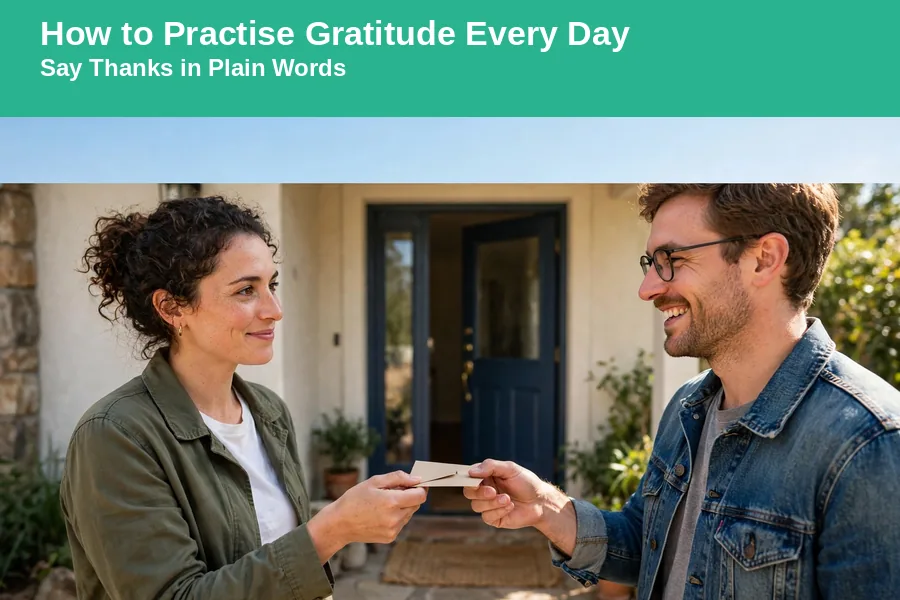
A short thank you note can lift a whole day for the person who gets it. Tell them what they did, when they did it, and why it helped you. “Thanks for the lift on Tuesday, it saved me a long cold walk” works well. Such thanks feels real because it names a clear act, not a vague feeling.
You can also thank people at work without making it awkward or formal. This is part of how to practise gratitude every day. Thank a colleague for clear notes, quick help, or calm words in a meeting. Keep it short, warm, and tied to one real moment from that day.
Gratitude for family grows from the same plain, specific words each day. Thank your partner for dinner, your child for a hug, or your mum for a call. Say what you liked, not just “thanks for everything” in a rush. Small thanks, said often, keep close bonds warm without grand gestures.
Gratitude on hard days
Learning how to practise gratitude every day does not ask you to pretend all is well. It asks you to notice one small thing that did not go wrong today. Hot water, a safe bed, a kind nurse, or a quiet minute can count. If you feel low, keep the bar very low and drop the rest.
Self gratitude matters on such days, though it can feel strange at first. Thank yourself for getting up, making a call, or cooking a simple meal. Thank yourself for resting when rest was the wise choice that day. Such words are not praise for show, they are plain facts about effort.
If grief, illness, or money worry fills your day, gratitude may feel out of reach. That is normal, and no habit should add guilt to your load. Skip the practice, ask for help, or speak to your GP if low mood lingers. Gratitude and mood link in research, but gratitude never replaces care or support.
Small pauses and gratitude walks
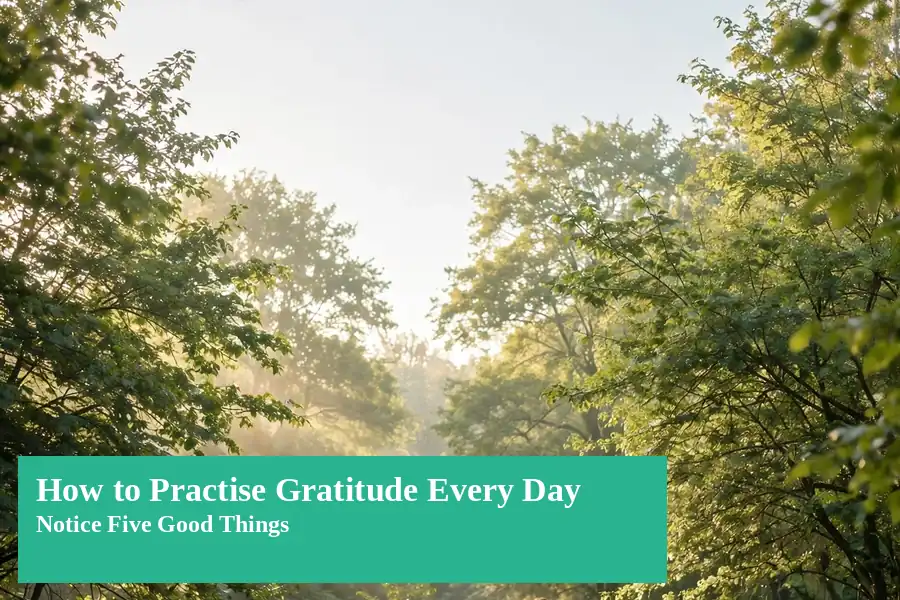
A gratitude walk turns a normal walk into a calm search for good things. Walk for ten minutes and notice five things you value on the way. A tree in bloom, a child’s laugh, or fresh bread smells can count. You do not need a park, a trail, or special shoes for this walk.
Small pauses work in the same way inside your home or at your desk. Pause before a meal and notice who grew, cooked, or served the food. Read how to start cooking at home for beginners for easy first steps. A pause before eating links thanks to taste, warmth, and company.
A walk with a pet adds one more easy source of daily thanks each day. A dog’s glad greeting, a cat’s calm purr, or a shared quiet walk can lift mood. If you plan to welcome a pet, read how to prepare for your first pet first. Care for a pet also teaches steady daily thanks through feeding, walks, and play.
A weekly rhythm that stays simple
A weekly rhythm keeps gratitude fresh without turning it into a chore. Use a different small habit on each day, and keep each one short. Repeat the week, swap days that do not suit you, and drop habits that feel forced. The table below gives one plain plan you can start this week.
| Day | Small habit | Time it takes |
|---|---|---|
| Monday | One good thing with morning coffee | One minute |
| Tuesday | Thank one person in plain words | Two minutes |
| Wednesday | Gratitude walk, five things noticed | Ten minutes |
| Thursday | Three good things before bed | Three minutes |
| Friday | Thank yourself for one real effort | One minute |
| Saturday | Share thanks at a family meal | Five minutes |
| Sunday | Pick one best moment of the week | Three minutes |
Keep a gratitude habit only if it still feels kind after two weeks. That is how to practise gratitude every day, in a way that fits you. If a habit feels dull, change the time, the place, or the prompt.
Mistakes that make gratitude feel forced
Forced gratitude often comes from long lists written with no real feeling. Ten vague items at speed teach your mind to rush past good things. Short and true beats long and hollow in this practice.
Comparison is another trap that can sour a kind habit fast. Thanks should not depend on someone else having a worse day than you. “At least I have more than them” is not gratitude, it is relief mixed with guilt.
- Do not use gratitude to hide anger, grief, or a real problem.
- Do not chase a streak so hard that a missed day feels like failure.
- Do not copy grand lists from social media that do not fit your life.
- Do not thank people with praise you do not truly mean.
Questions readers ask about daily gratitude
How long does a daily gratitude practice take?
Most daily gratitude habits take one to ten minutes, based on the habit you pick. One good thing takes about one minute, while a gratitude walk takes ten. Pick a length that fits your day, then keep it steady for two weeks.
Does a gratitude journal work better than spoken thanks?
A gratitude journal suits people who like writing and quiet reflection at night. Spoken thanks suits people who like talking and quick daily habits on the move. Both can work well, so pick the form you will still enjoy next month.
What if I cannot think of anything to feel grateful for?
Start with body basics such as breath, warmth, water, food, or a safe bed. Then move to small help, such as a text, a smile, or a held door. Tiny items count, and they often lead your mind to larger good things.
Can children practise gratitude in simple ways?
Yes, children can share one good thing at dinner or before bed each night. Keep it short, fun, and free of pressure, with no right answer at all. Praise the sharing itself, not the size or worth of the item named.
Is gratitude enough to help low mood?
Gratitude can support mood, but it is not a cure for low mood or depression. Keep sleep, movement, and social contact in your daily routine as well. Speak to your GP if low mood lasts more than two weeks or gets worse.
How do I keep gratitude fresh after a few months?
Change one prompt, place, or habit each month so the practice stays alive. Try walks, letters, meal thanks, or a new weekly rhythm from this guide. Fresh details keep thanks real, while stale lists soon feel like a chore.
Start tonight with one small thank you
You now know how to practise gratitude every day in real daily life. Pick just one habit from this guide, and try it tonight before bed. Name one good thing, say why it mattered, and let that be enough. Tomorrow, you can do the same again, with no pressure at all.
Over weeks, those small moments add up to a calmer, kinder view of your days. Start small, stay specific, and keep thanks close to your real life.
