
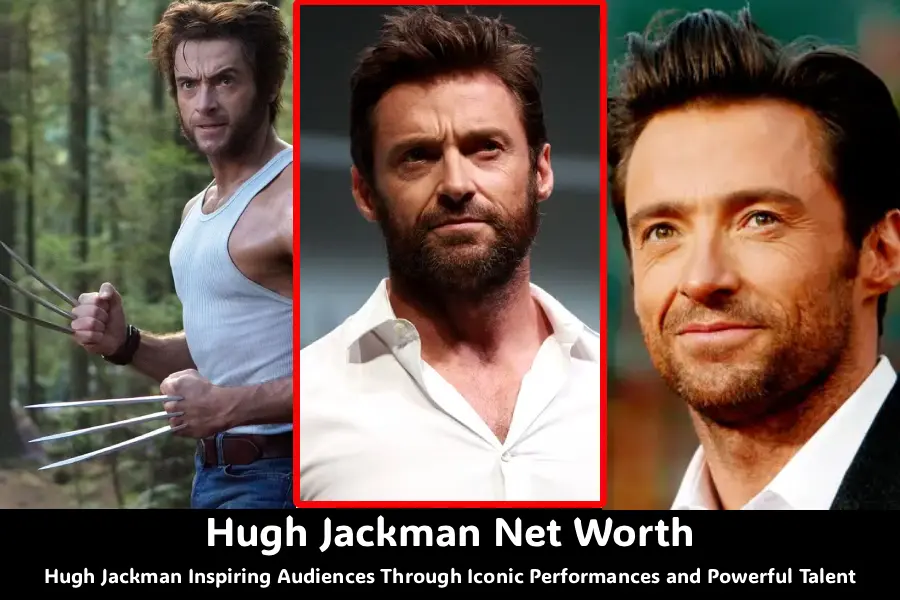
Hugh Jackman net worth sits at an impressive $120 million as of 2026 — a number built not by luck, but by decades of smart career moves across film, Broadway, and business. Few actors have managed to dominate Hollywood action blockbusters and win Tony Awards at the same time. Jackman did both, and his bank account reflects it.
Who is Hugh Jackman?
Hugh Jackman is an acclaimed Australian actor, singer, and producer, globally famous for playing Wolverine in the X-Men films from 2000 to 2024. Born October 12, 1968, in Sydney, he studied journalism before turning to acting, debuting on TV and breaking through with X-Men.britannica+1
A versatile triple-threat, Jackman won Tony Awards for The Boy from Oz (2004) and The Music Man, a Grammy for The Greatest Showman, an Emmy, and a Golden Globe for Les Misérables. His net worth is around $120 million from films, stage, and ventures like Laughing Man Coffee.parade+1
| Detail | Info |
|---|---|
| Full Name | Hugh Michael Jackman |
| Date of Birth | October 12, 1968 |
| Birthplace | Sydney, New South Wales, Australia |
| Nationality | Australian |
| Height | 6 ft 2 in (188 cm) |
| Profession | Actor, Singer, Producer |
| Education | University of Technology Sydney; WAAPA |
| Breakthrough Role | Wolverine – X-Men (2000) |
| Spouse (Former) | Deborra-Lee Furness (m. 1996–2023) |
| Children | 2 (Oscar and Ava) |
| Net Worth (2026) | ~$120 Million |
| Active Since | 1994 |
| Awards | Tony, Emmy, Golden Globe, Grammy (nomination) |
| Guinness Record | Longest-running Marvel character portrayal |
| Production Company | Seed Productions |
| Charity | Laughing Man Foundation |
| Real Estate | NYC, Australia |
| Social Following | 35M+ (Instagram) |
| Known For | Wolverine, The Greatest Showman, The Music Man |
Early Life and the Role That Changed Everything
Hugh Jackman grew up in Sydney as the youngest of five children after his mother returned to England when he was eight. He originally studied journalism before switching to acting — a pivot that clearly paid off.
His early career included Australian TV roles in Correlli (1995) and the indie film Erskineville Kings (1999). But everything changed when he was cast as Wolverine in X-Men (2000) at the last minute, replacing Dougray Scott. That single decision set the course for a $120 million career.
His initial pay for the first X-Men film was modest — reportedly in the mid-six-figure range. Within a decade, he was negotiating eight-figure deals per film.
How Hugh Jackman Net Worth Grew Through X-Men
The X-Men franchise is the single biggest contributor to Hugh Jackman’s wealth. He played Wolverine across 10 films over 17 years — a run that earned him a Guinness World Record for the longest portrayal of a Marvel character.
By the time X-Men: Days of Future Past (2014) hit theaters, Jackman was earning up to $20 million per film. Logan (2017) added critical acclaim to commercial success, grossing over $619 million worldwide on a $97 million budget. Then came Deadpool & Wolverine (2024), which became one of the highest-grossing R-rated films of all time — adding another major payday to his ledger.
Backend profit deals amplified the base salary. In franchise films with strong global box office performance, those backend percentages can easily double an actor’s initial paycheck.
Broadway: The Income Stream Most Actors Don’t Have
While most Hollywood stars skip the stage, Jackman leaned into it — and it became one of his most lucrative revenue channels.
He won the Tony Award for Best Actor in The Boy from Oz (2004), playing Peter Allen on Broadway. The role cemented him as a genuine musical theater star, not just a movie actor doing a side project. He reportedly earned over $100,000 per week during peak Broadway runs.
His 2022 revival of The Music Man opposite Sutton Foster was a critical and commercial smash. The run sold out consistently, commanding top ticket prices and generating tens of millions in production revenue. Add his Emmy for hosting the 2004 Tony Awards and his Greatest Showman soundtrack work, and Broadway has contributed over $20 million to his total wealth.
The Greatest Showman: A Case Study in Smart Deal-Making
The Greatest Showman (2017) is a masterclass in how Hollywood backend deals work. Jackman took a reported $10 million upfront — then negotiated profit participation on the back end.
The film grossed over $435 million globally against a $84 million budget. The soundtrack became one of the best-selling albums of 2018, spending weeks at the top of the UK charts. Between box office backend earnings and soundtrack royalties, Jackman’s total take from this single project likely exceeded $20 million.
It also launched a sold-out world concert tour, The Man. The Music. The Show., adding touring revenue on top of everything else.
Diverse Roles That Kept the Money Flowing
Beyond the franchise and Broadway, Jackman made smart choices in prestige films that kept both his profile and income elevated.
Les Misérables (2012) earned him an Oscar nomination and reportedly over $5 million in salary. Prisoners (2013) and The Prestige (2006) reinforced his dramatic credibility. Kate & Leopold (2001) showed his romantic comedy range. None of these were blockbusters, but each kept him bankable and prevented him from becoming typecast.
Typecast actors plateau. Versatile actors compound.
Hugh Jackman Net Worth Breakdown by Income Source
| Income Source | Estimated Career Earnings | Key Examples |
|---|---|---|
| Film Salaries | $100M+ | Wolverine series, Logan, Deadpool & Wolverine |
| Backend Film Deals | Included above | Greatest Showman, X-Men: DOFP |
| Broadway & Stage | $20M+ | The Boy from Oz, The Music Man |
| Endorsements | $5M+ | Laughing Man Coffee, brand partnerships |
| Music & Touring | $5M+ | Greatest Showman soundtrack, live tours |
| Production Deals | $5M+ | Seed Productions projects |
| Real Estate | $5M+ net gains | NYC and Australian property sales |
His single-year earnings reportedly hit $23 million in 2015, placing him among the top 10 highest-paid actors globally that year.
Endorsements, Coffee, and Business Investments
One of the more underrated pillars of Hugh Jackman’s financial life is his Laughing Man Coffee brand. He founded it after meeting a struggling Ethiopian coffee farmer, and structured it so a portion of all profits goes to the Laughing Man Foundation, supporting education and community programs globally.
The brand was eventually acquired by Keurig Dr Pepper in 2015, with Jackman retaining a stake and brand ambassador role. It’s part social enterprise, part savvy business move — and it generates ongoing passive income.
He has also worked with brands including Lipton Tea and various luxury fashion endorsements over the years.
Real Estate: New York and Australia
Jackman and his ex-wife Deborra-Lee Furness built up a solid real estate portfolio during their 27-year marriage. Their primary residence was a luxury apartment in the West Village, New York City, which they reportedly purchased for around $21 million.
They also owned properties in Australia and the Hamptons. Following their 2023 separation, the couple’s real estate assets became part of divorce proceedings — though neither party publicly confirmed specific settlement terms.
Real estate has historically been a wealth-preservation move for Jackman rather than an active investment strategy, and property appreciations in NYC have historically worked in his favor.
Philanthropy: Giving While Growing Wealth
Jackman is a UNICEF Goodwill Ambassador and has been involved in global children’s rights causes for years. He’s also a longtime supporter of the Global Poverty Project and has used his platform to raise awareness on issues ranging from clean water access to education funding.
The Laughing Man Foundation channels profits directly into community development programs. His philanthropic spending hasn’t diminished his wealth — structured charitable giving often offers tax efficiency while creating real-world impact.
What’s Next: Can Hugh Jackman Net Worth Reach $150 Million?
Post-Deadpool & Wolverine, Jackman’s position in the MCU is more active than ever. If he continues in Marvel projects — even in supporting capacities — the salary and backend deal potential remains massive.
He’s also expressed interest in returning to Broadway and live performance. A Greatest Showman sequel or standalone concert special remains possible. His production company, Seed Productions, continues to develop projects as well.
Analysts tracking celebrity net worth trajectories suggest Jackman could realistically cross the $150 million mark by 2028 if MCU involvement continues and his stage work maintains current commercial levels.
Frequently Asked Questions
What is Hugh Jackman’s net worth in 2026?
Hugh Jackman’s net worth is estimated at approximately $120 million as of 2026, making him one of the wealthiest Australian entertainers globally.
How much did Hugh Jackman earn for Wolverine?
His Wolverine pay grew from mid-six figures in the first X-Men film to a peak of around $20 million per film by the franchise’s later entries.
Did Hugh Jackman make money from The Greatest Showman?
Yes — significantly. Beyond his $10 million upfront fee, backend profit participation and soundtrack royalties likely pushed his total earnings from the project past $20 million.
What businesses does Hugh Jackman own?
He co-founded Laughing Man Coffee, which was acquired by Keurig Dr Pepper. He retains a brand role and stake, and runs Seed Productions, his film and TV production company.
How did Hugh Jackman’s divorce affect his net worth?
Jackman and Deborra-Lee Furness separated in 2023 after 27 years. While specific settlement figures haven’t been disclosed publicly, the division of real estate and assets likely had some impact on his liquid wealth.
Final Verdict
Hugh Jackman’s $120 million fortune isn’t the result of one lucky break — it’s the result of 25 years of calculated versatility. From the Wolverine claws to Broadway curtain calls, from a coffee brand with social purpose to backend deals on billion-dollar films, every layer of his career has stacked on top of the last.
The Hugh Jackman net worth story is ultimately about range. In an industry that rewards consistency and punishes repetition, he found a way to keep audiences — and studios — always wanting more. That’s not just a talent. That’s a strategy.
